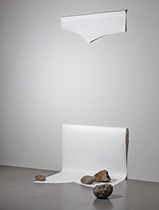
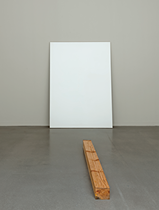
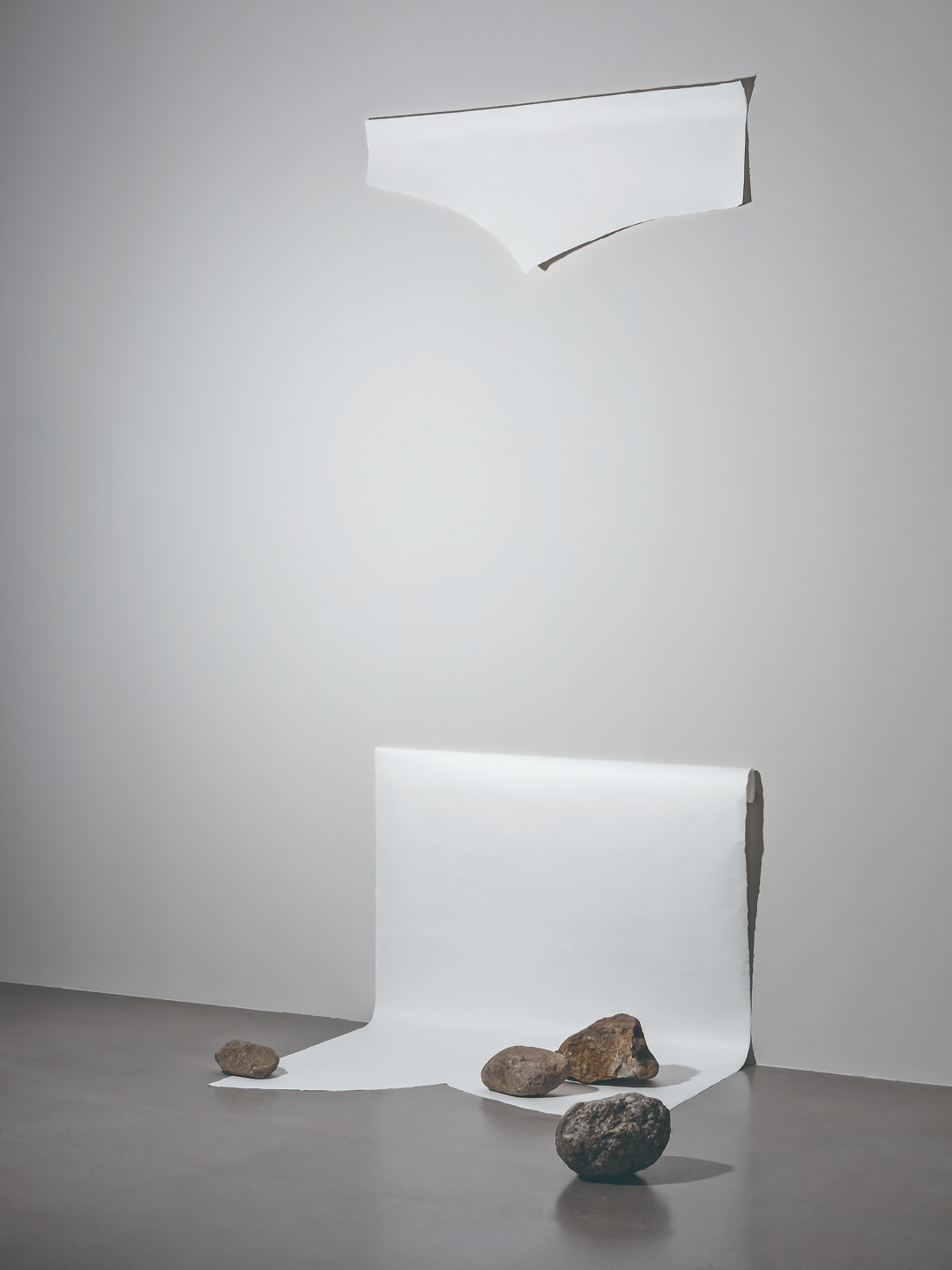
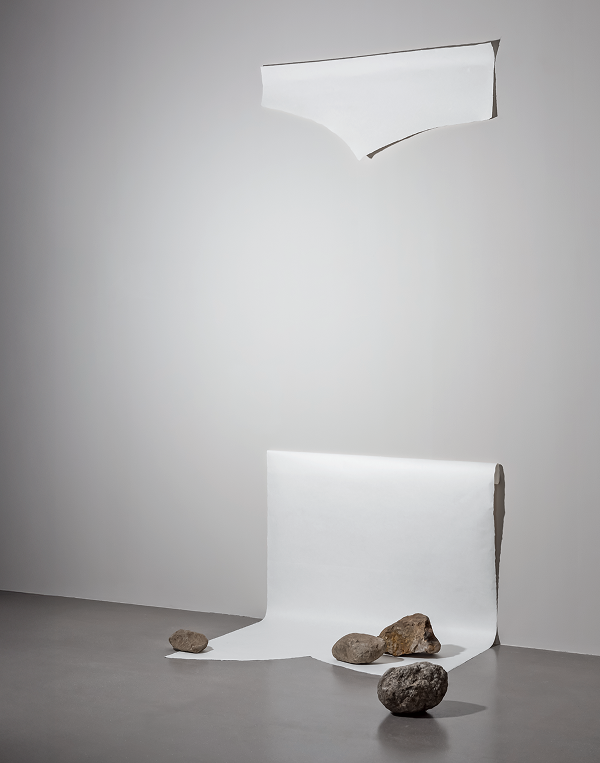
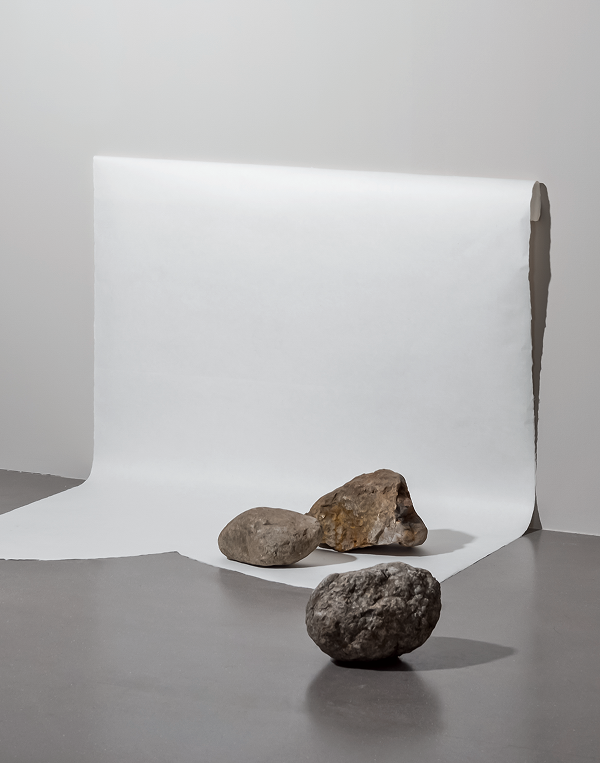
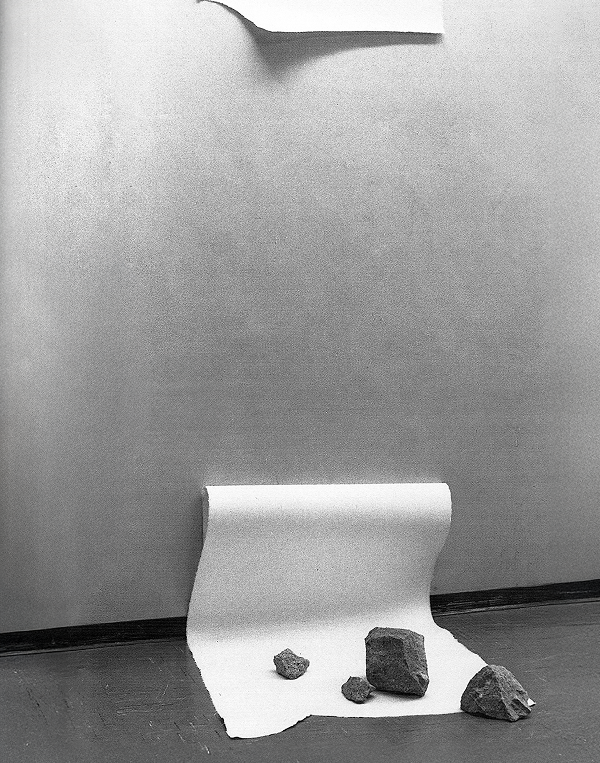
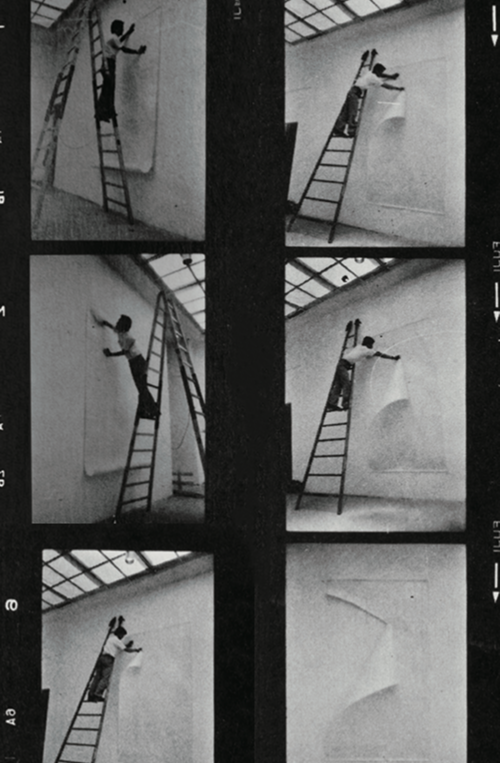
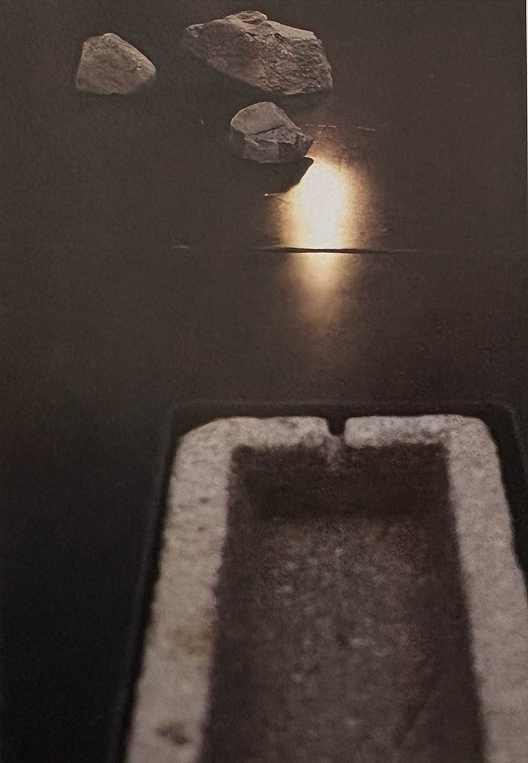
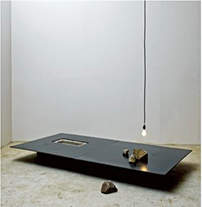
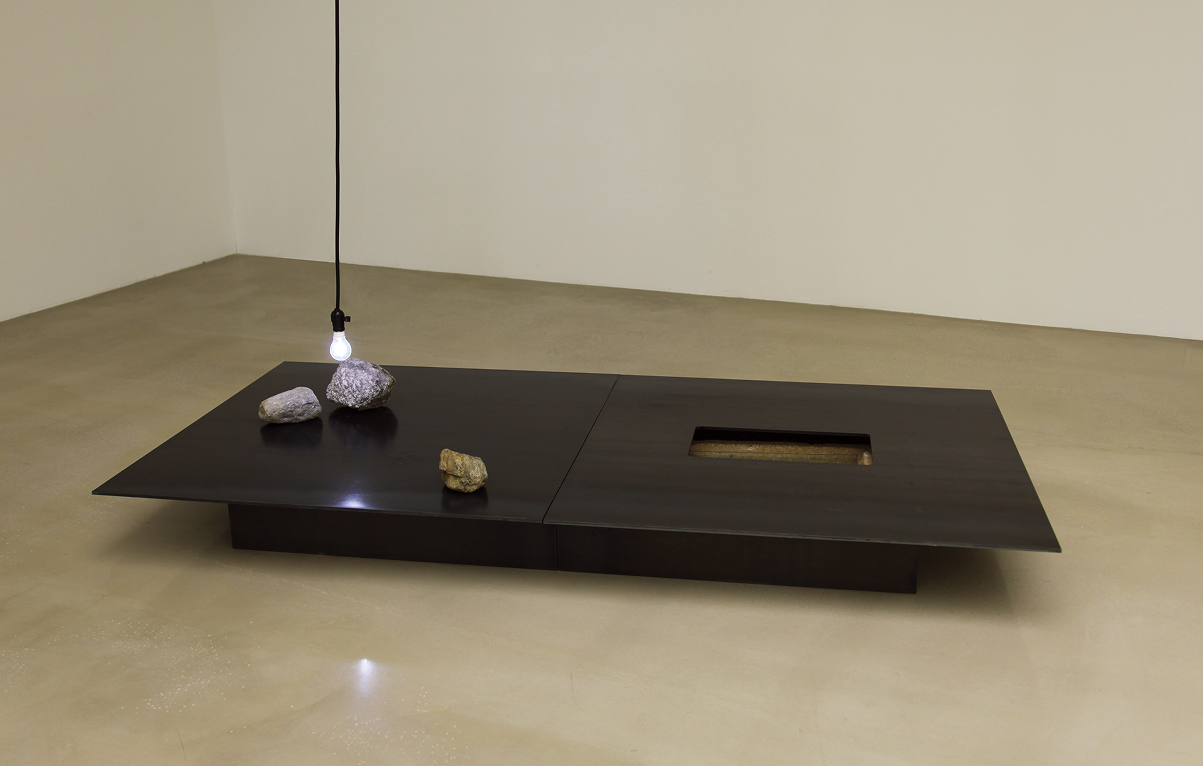
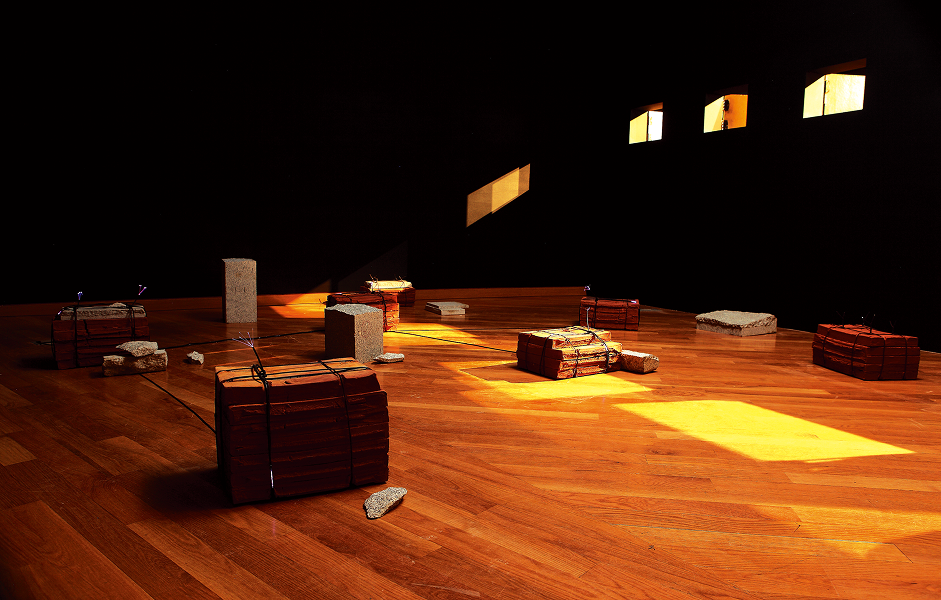
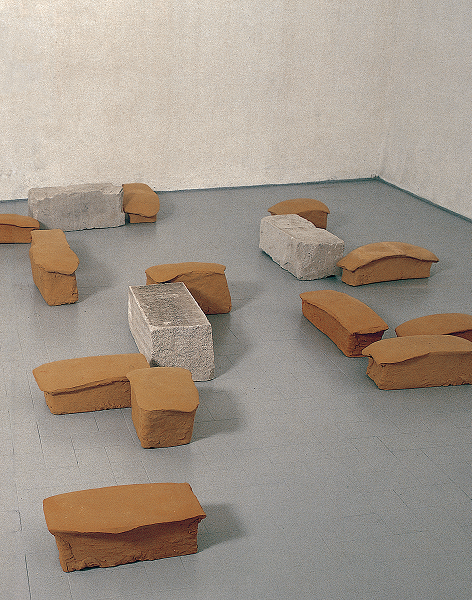
In Relation , the torn paper, unaltered stone, empty canvas, and wooden supports together shift sculpture from a discourse of “object” (Seiendes) toward a discourse of “being” (Sein). Sculpture ceases to be a thing, and becomes a mode—a relational field constituted by intervals, resonances, and the charged space between elements. Relation is not a sculptural object; it is the way it stands, the way it is placed, the way it becomes a spatial constellation of gaps to be perceived. In Relation (Place), the act of tearing paper ruptures the premise of completion and perfection. This rupture is not a formal accident, but an event arising from relations between presences. It destabilizes anthropocentric sculptural logic and returns the site of thinking back to nature and matter themselves. Here, Shim Moonseup initiates a profound aesthetic shift toward an ontology in which meaning and form emerge from relational circumstance rather than authored certainty.
Relation(Place), 300x148x135cm, 1972, Paper, Stone (remake)
Relation (Place), 300x148x135cm, 1973, Paper, Stone (2017 remake)
Relation (Place), 300x148x135cm, 1973, Paper, Stone (2017 remake, Details) The 8th
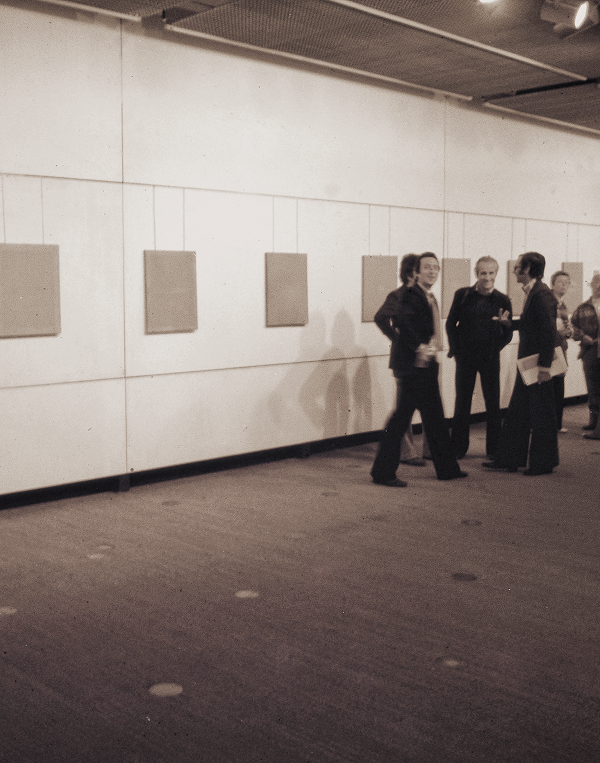
The 8th Paris Biennale, 1973, Paris, France
The 8th Paris Biennale, 1973, Paris, France
Opening Up
1975–1976
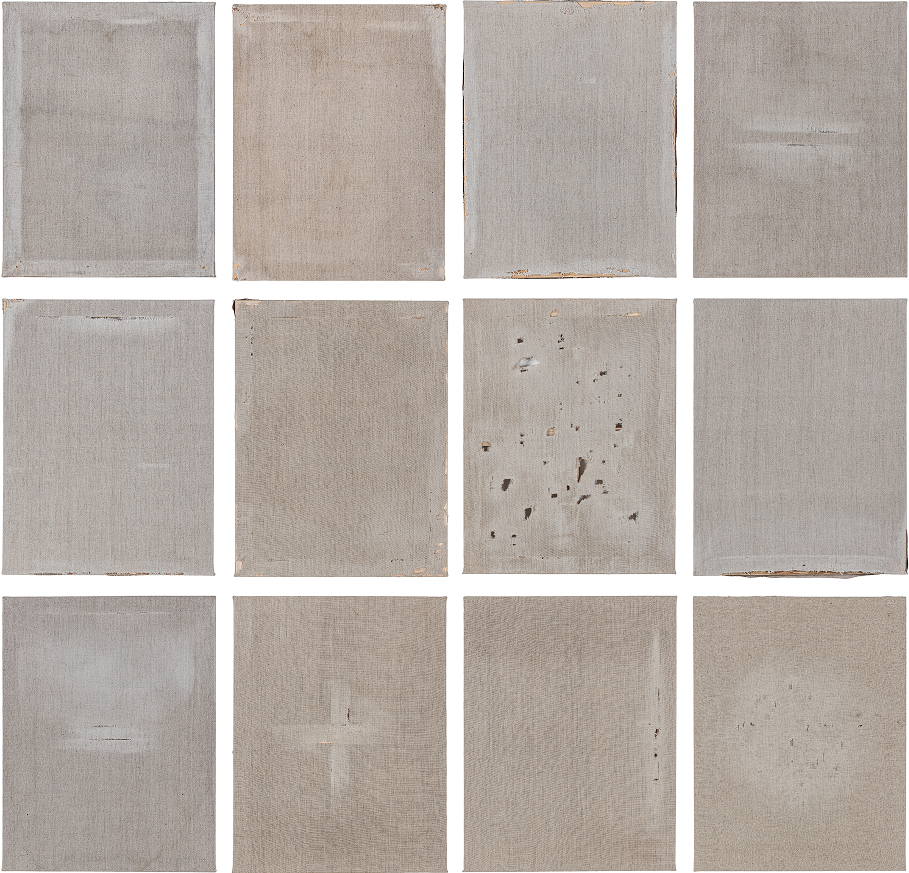
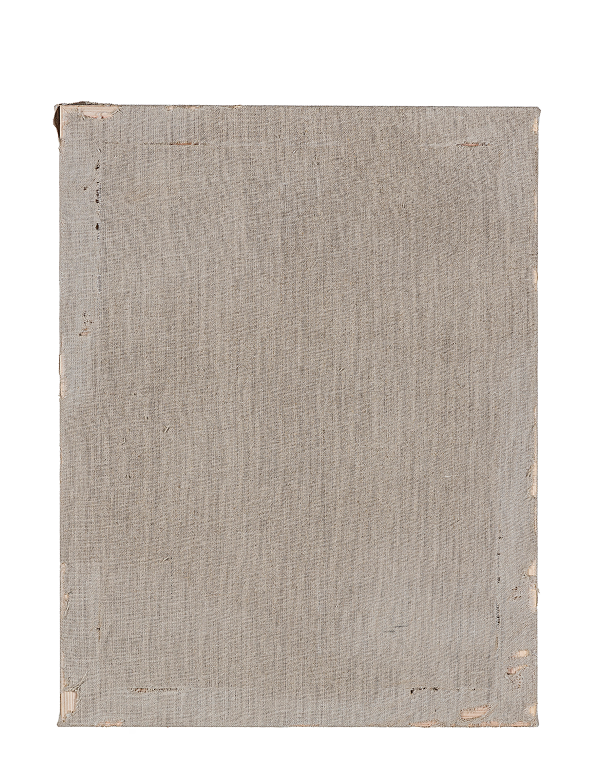
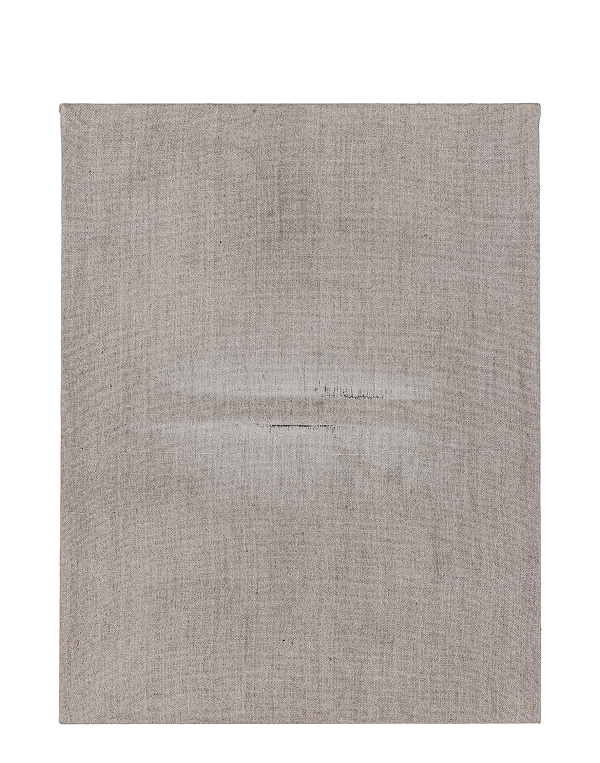
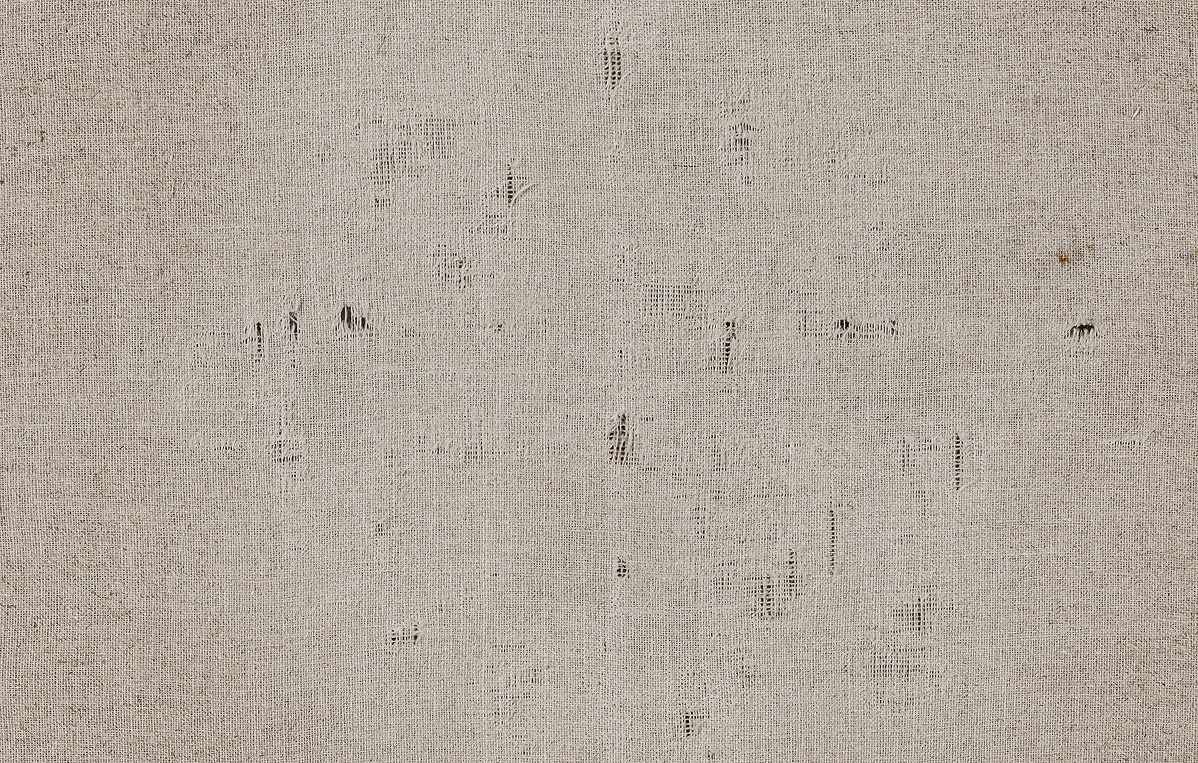
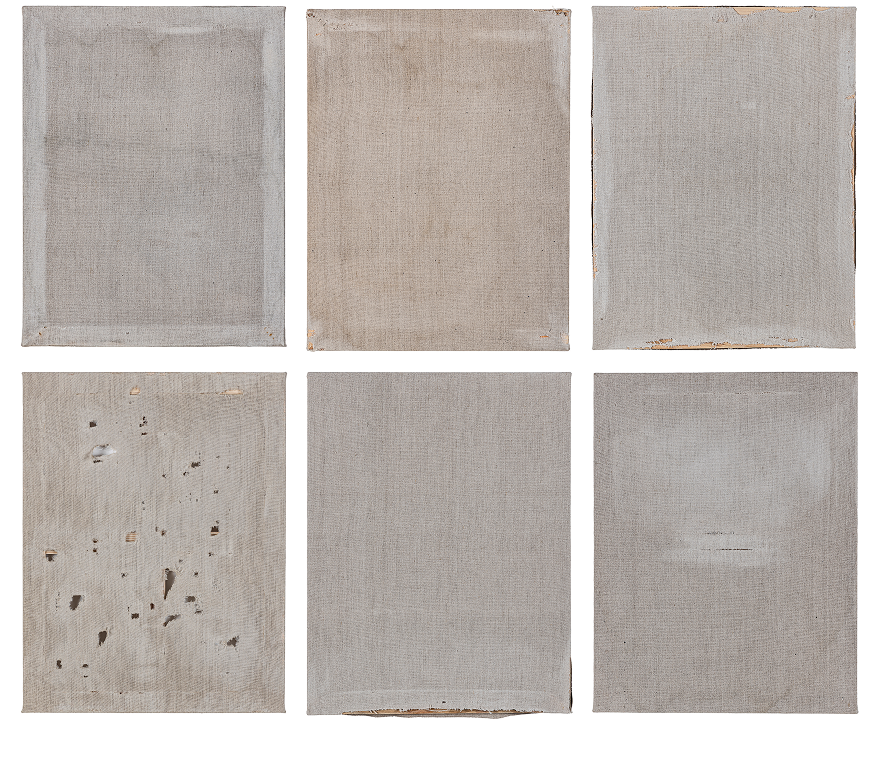
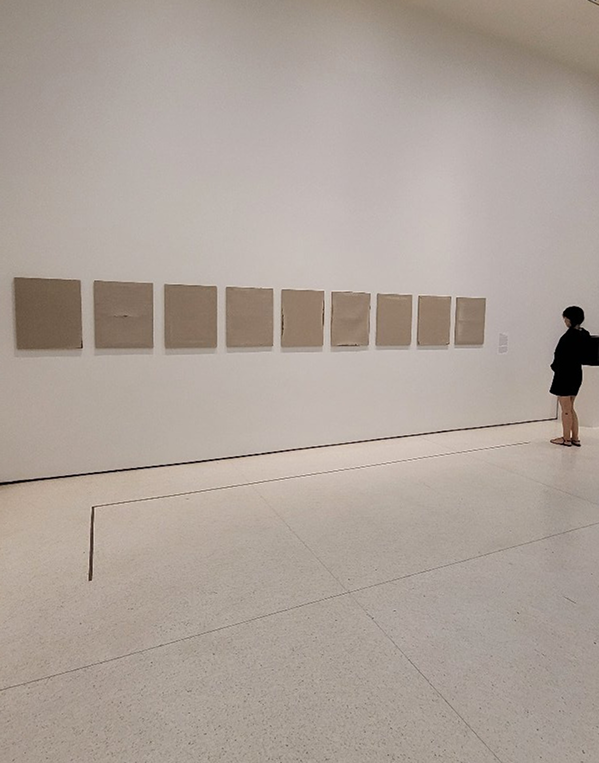
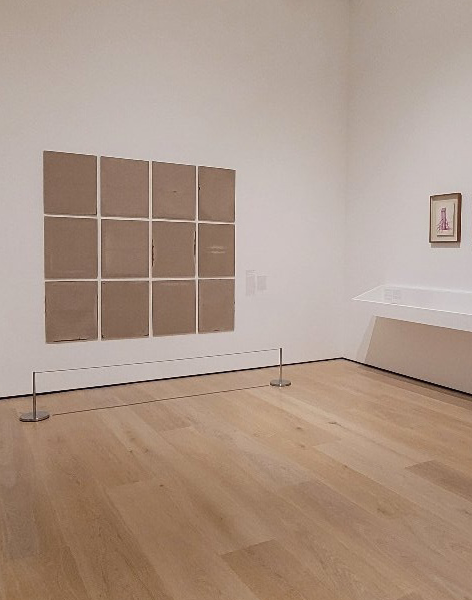
Opening Up marks the critical threshold at which Shim Moonseup elevated time to the very essence of sculpture. Here, sculpture is no longer conceived as a discrete material form but as the trace, abrasion, and movement left by time itself. Through the act of sanding the canvas, he reveals that the erosion of time is not merely a physical effect but a sculptural principle.
Within the abraded, wounded surface lies the irreparable trauma of the Korean War—trauma the artist personally endured. This wound, inscribed materially, extends toward a deep empathy with those whose suffering remains unresolved in the present. Shim does not simply remove a surface or cut an injury into it. Rather, he activates a sculptural gesture that opens sensory depth and existential presence—an opening toward the conditions of perceiving, and the conditions of being.
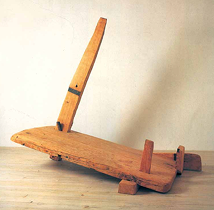
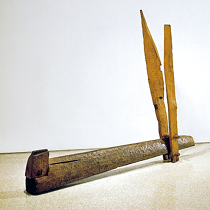
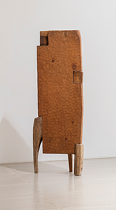
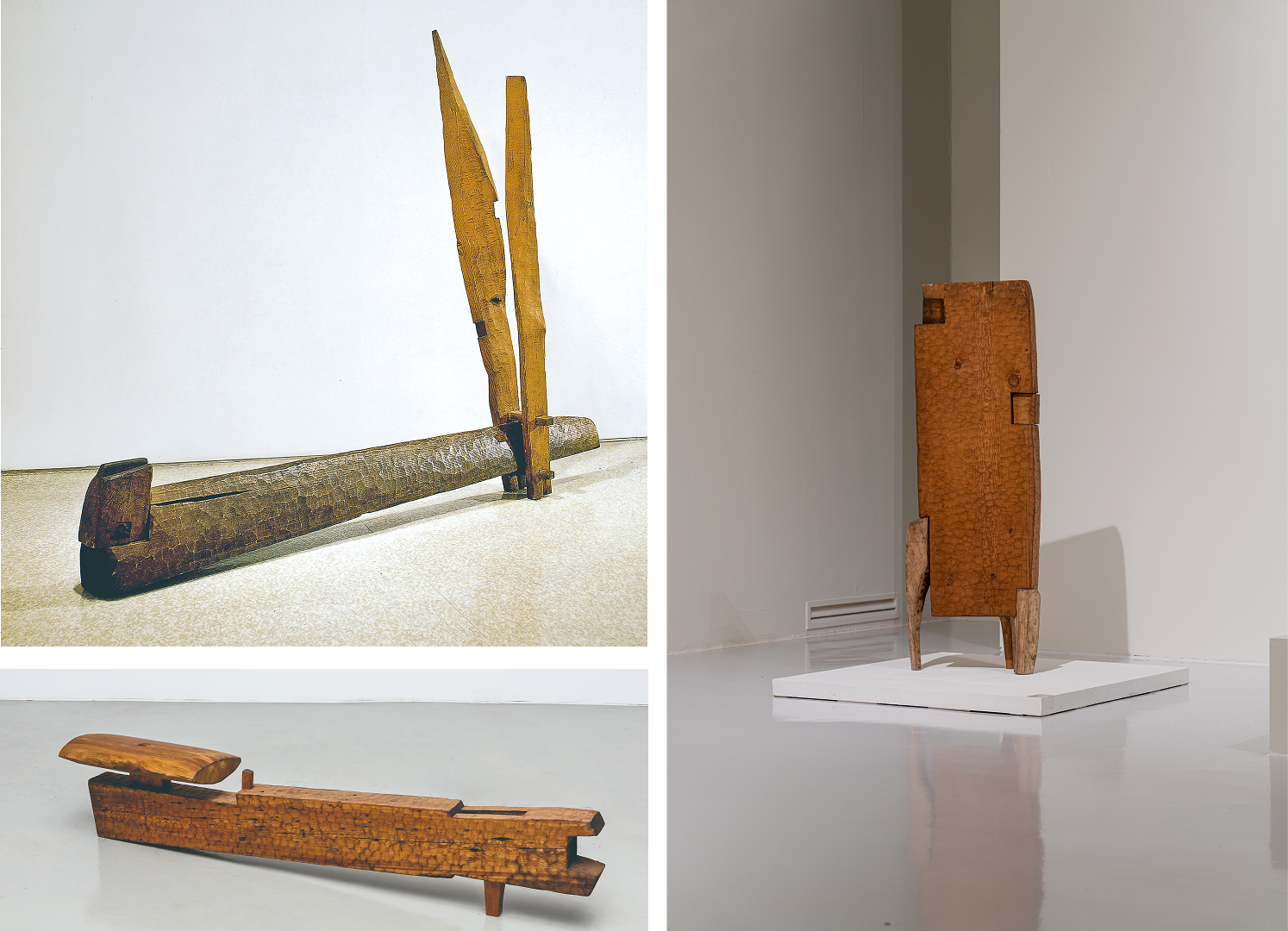
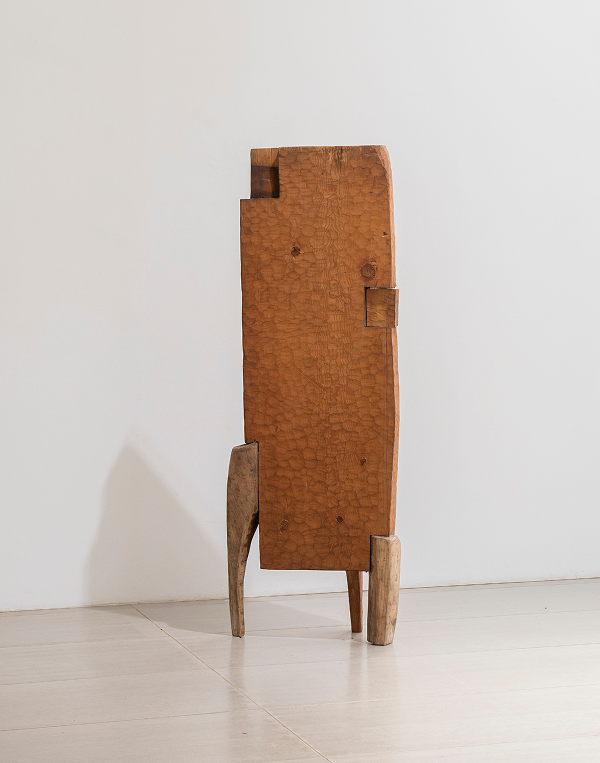
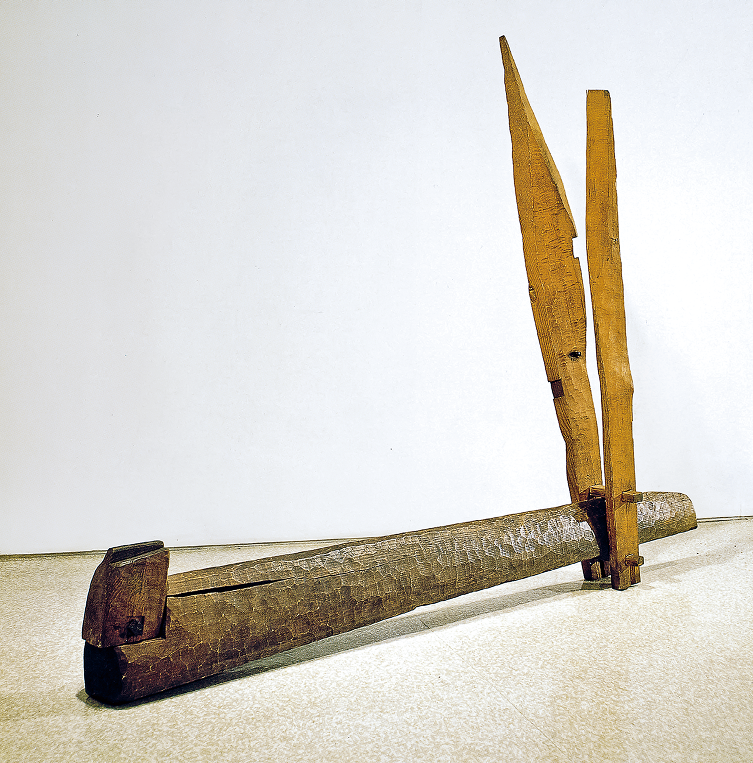
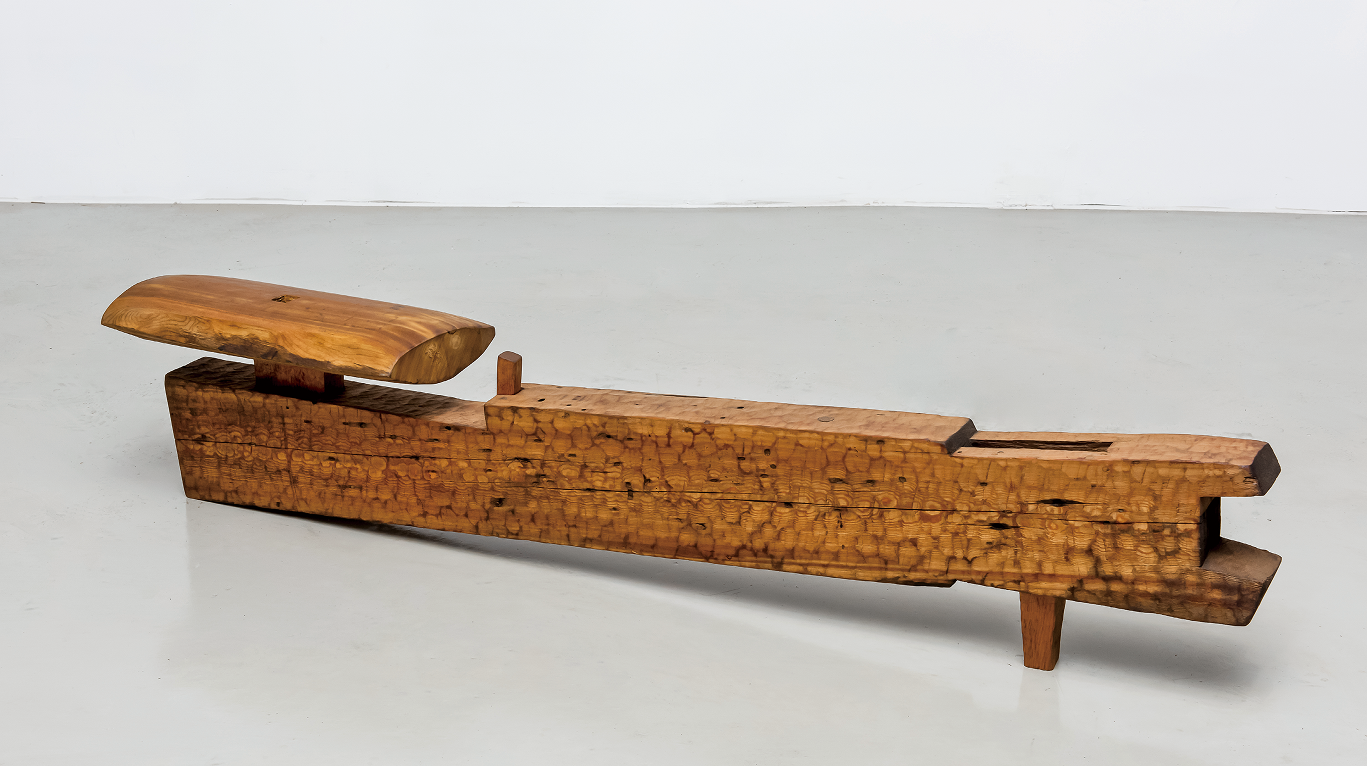
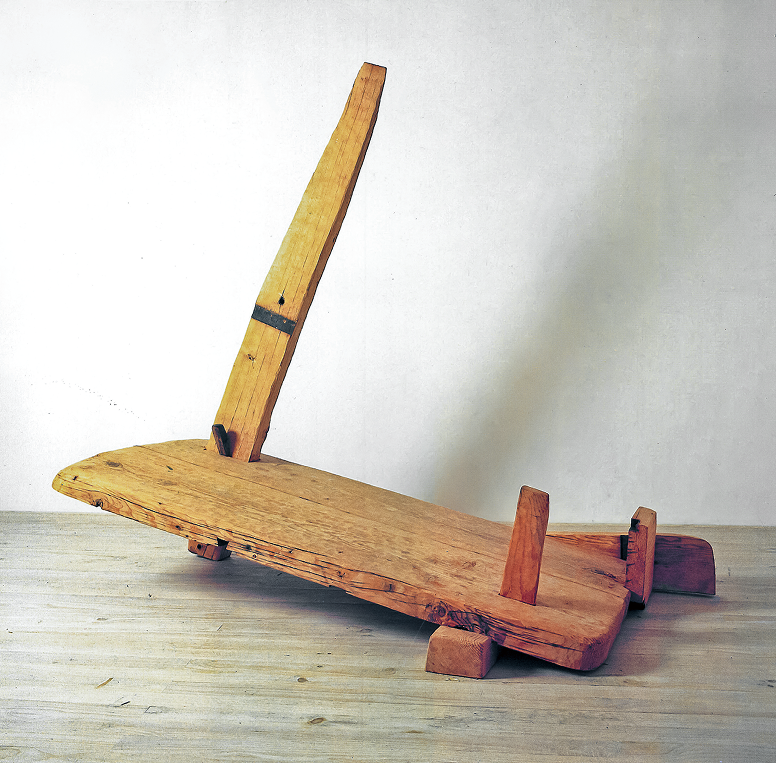
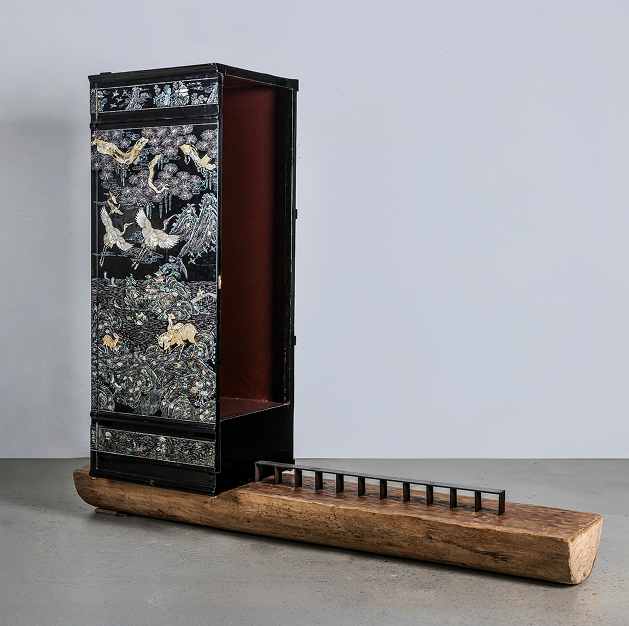
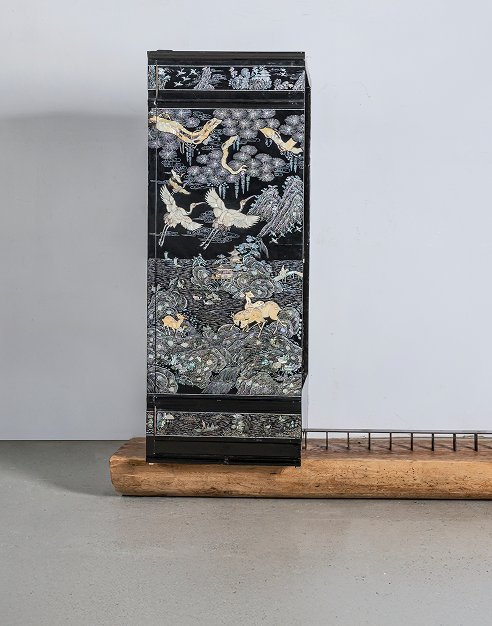
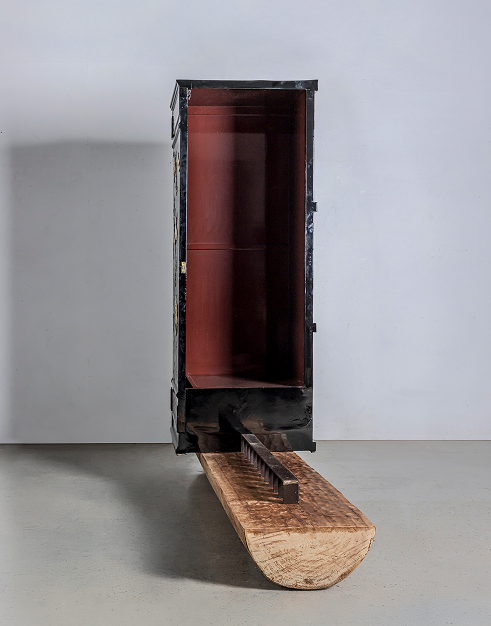
Most of the materials used in Wood Deity were reclaimed from wooden structures demolished during the extensive reconstruction projects for the Olympic preparations in Korea (1988) and China (2008). The artist does not mechanically process the wood; he allows its inherent rhythm to speak, permitting nature (自然) itself to articulate. The title “Wood Deity” does not imply a spirit inhabiting wood, but declares that wood—as an ontological being—is already sacred in itself. The aesthetics that arise from the slow rhythm of natural materials—wood, iron, stone—constitute a fundamental question, and a radical resistance, against contemporary visual culture governed by velocity and image saturation.
Wood Deity, 240x224x120cm, 1992, Wood
Wood Deity, 190x234x30cm, 1989, Wood
Wood Deity, 220x25x154cm, 1991, Wood
Wood Deity
Wood Deity, 240x224x120cm, 1992, Wood
Wood Deity, 220x25x154cm, 1991, Wood
Wood Deity, 190x234x30cm, 1989, Wood
Wood Deity, 40x192x27cm, 1986, Wood
Metaphor
1996
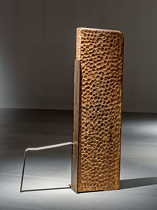
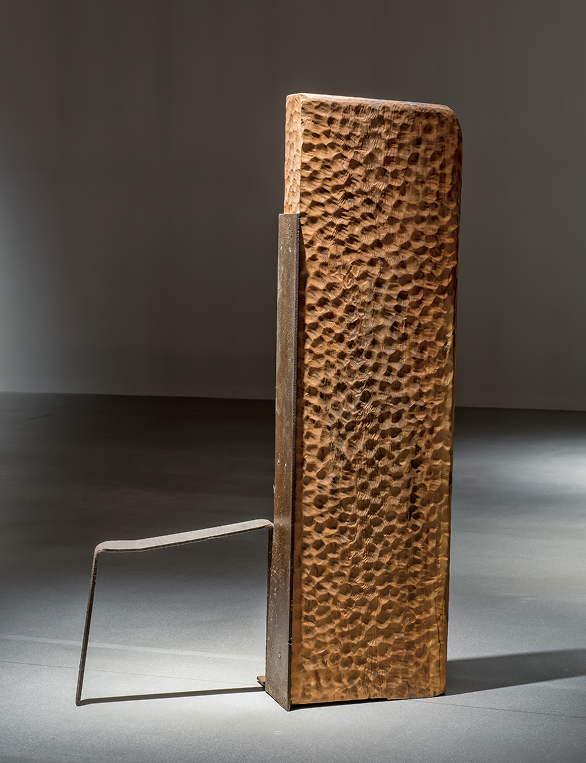
Metaphor records the sculptural encounter, tension, and reconciliation between wood as the product of nature and steel as the emblem of the artificial. By placing heterogeneous elements in collision and adjacency, the artist seeks the possibility of “communion” and “interpenetration” that may arise between them. The juxtaposition of wood and steel visualizes conflict and reconciliation, contradiction and harmony—conditions that inevitably emerge through the coexistence of nature and humanity, antiquity and modernity. The work is itself a metaphor for the current epoch of technological and ecological transition
Metaphor, 172x102x33cm, 1996, Wood, Steel
Wood Deity, 40x192x27cm, 1986, Wood
Metaphor
Metaphor, 172x102x33cm, 1996, Wood, Steel
The Presentation
2001–2012
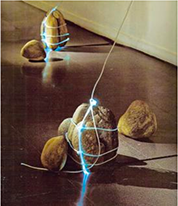
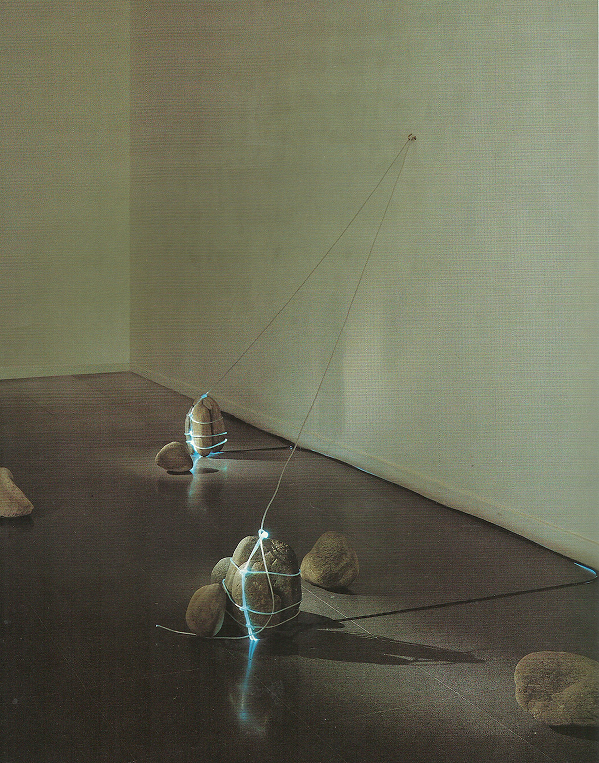
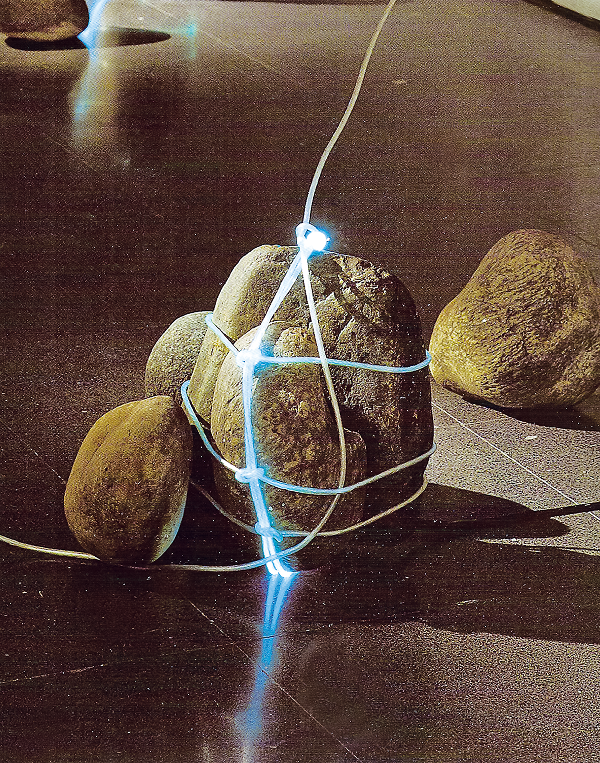
The Presentation discloses the passage of existence from prima materia to prima energeia. Shim offers elemental substances—stone, metal, water, fire/light, and void—within which time, memory, and life-flow become perceptible. Here, matter cannot be subordinated to the finite aims of the human. It appears as an autonomous and enduring presence that emits its own condensed time and energy.
The Presentation, 180x306x153cm, 2008, Steel, Stone, Electricity
The Presentation, 147x306x153cm, 2001, Stone, Optical fibers
The Presentation - From Earth, 480x35x480cm, 2009, Stone clay, Iron
The Presentation, 315x147x175cm, 2001, Stone, Optical fibers
The Presentation, 315x147x175cm, 2001, Stone, Optical fibers (Detail)
The Presentation, 390x125x240cm, 2008, Steel, Stone, Electric Installation
The Presentation, 390x125x240cm, 2008, Steel, Stone, Electric Installation (Detail)
Thoughts on Clay
2010
Standing at another pivotal threshold, the artist returns to the most primordial material—earth—in Thoughts on Clay. Since antiquity, humanity has believed that we are born from clay and eventually return to clay. The earth was regarded as primal womb, as a site of perpetual circulation, and as a layered accumulation of time—strata. The artist visualizes this cyclical logic within Thoughts on Clay. Shim draws out the interior of terracotta so that sculpture is not the act of imposing form, but rather the revelation of matter’s autonomous interiority. The moment the artist ceases to “make,” nature begins its own work. The work underscores that the true sculptural force does not derive from fabrication, but from the process by which matter reveals itself and continues to transform beyond the artist’s intervention.
Thoughts on Clay, 1200x2400cm, 2010, Terracotta (Installation)
Thoughts on Clay, 28.5×28.5cm(4 pcs), 2002, Terracotta
Thoughts on Clay
Clayarch Gimhae Museum, Gimhae, Korea
Re-present
2001–2025
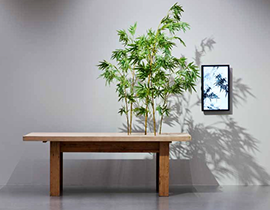
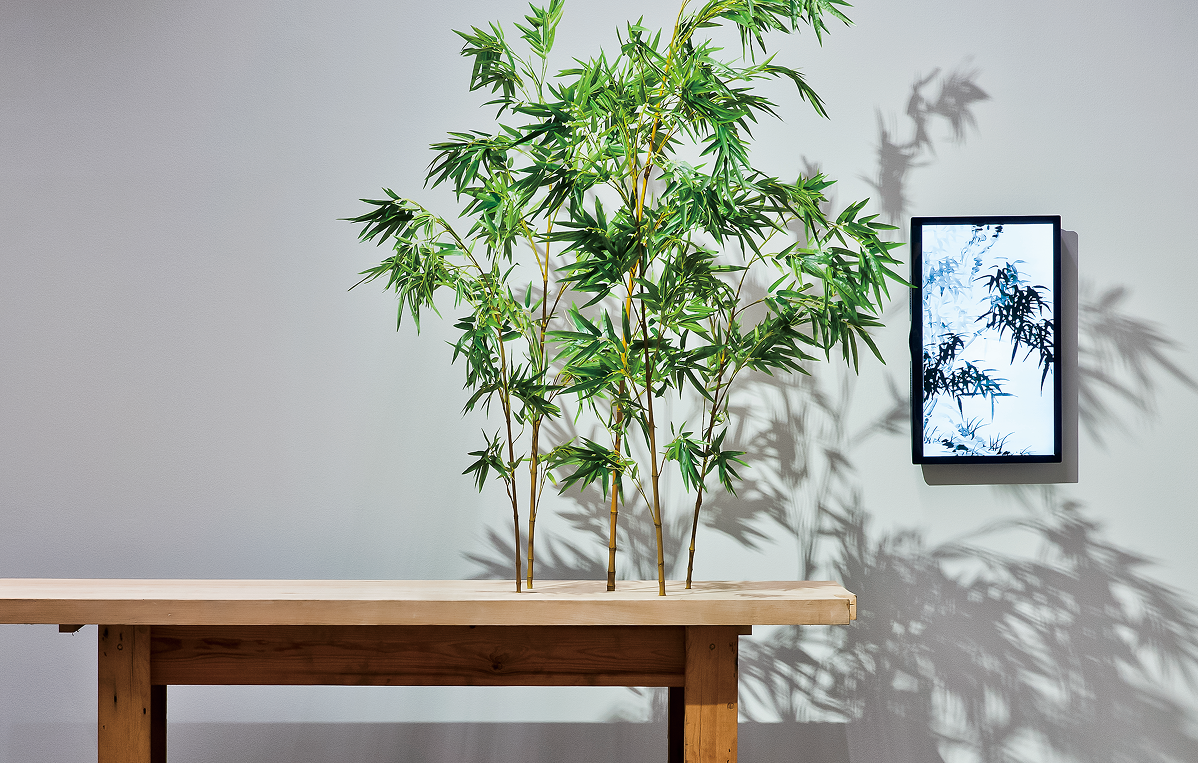
Composed of dead wood (timber) and living wood (bamboo), of physical bamboo and its digital counterpart, together with elements such as water and stone, Ruminations reconsiders the very act of sculpting through the overlapping strata of memory, temporality, and perception. It is not an act of repetition or reconstruction, but rather an embodiment of reincarnative awareness—a continual becoming in the present.
In this body of work, sculpture is not a fixed form but an exposure of relations in time, where multiple temporalities coexist. Shim Moonseup does not impose completion; he conducts the process, allowing the work to evolve through its own rhythm. The exhibited pieces are not static results but dynamic spatio-temporal fields, generating relations that emerge through the perception of the viewer and the fluidity of the surrounding environment.
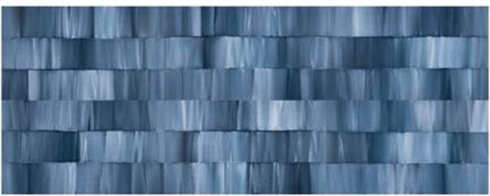
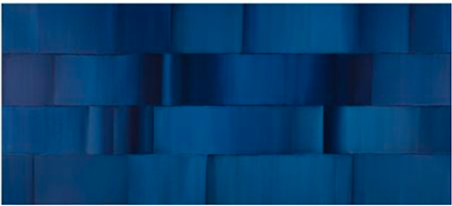
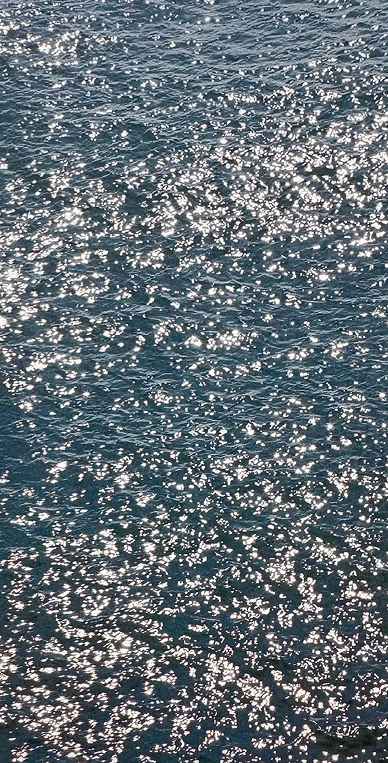
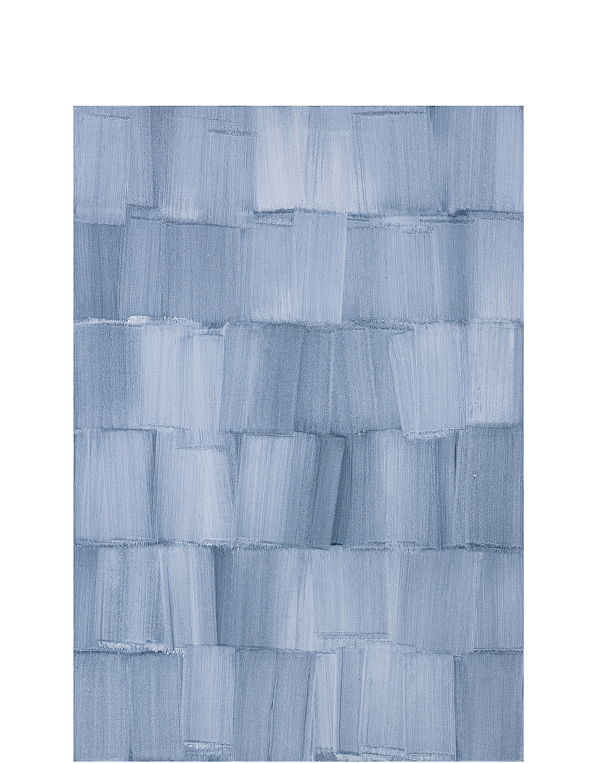
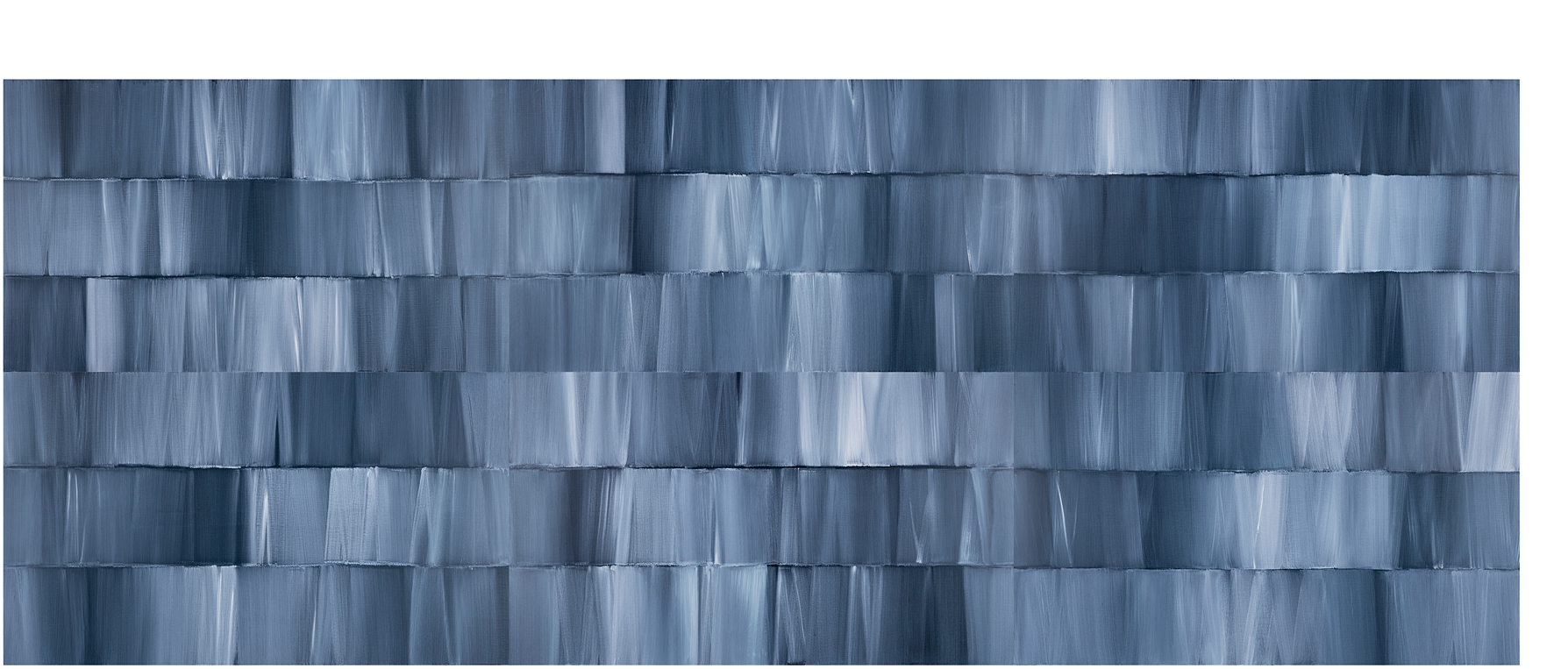
In the painted works of The Presentation, “the primordial blue lifted from the depths of the sea” meets “the white of desire that descends from the sky and shatters upon arrival,” producing a surface in perpetual swell. Shim describes this white as “a white that fractures and disperses like the blankness in East Asian painting.” Goethe once noted that “blue directs the mind toward the heavens through natural association.” Shim adds that blue possesses a deep affinity because it simultaneously holds the expanse of both the sky and the sea.
It is the blue that most immediately and universally comes to mind when we imagine sky and ocean. If “Klein Blue” may evoke strangeness and enigmatic rupture, Shim Moonseup’s blue is instead familiar—a deeply imprinted, easily operative color of everyday memory. Thus, the spectrum of blue and white perceived by each viewer inevitably varies according to the specific time and space they have lived through. And this is not limited to blue alone. Every color functions differently depending on the world one has experienced.
Through these congenial and resonant colors, the artist imbues the surface with rhythm and vital breath, revealing the ceaseless interchange of becoming and dissolution. As he notes, the painted surface is not a plane upon which something is merely depicted; it is a generative site in which the world briefly dwells. Shim continues to research and experiment so that painting itself may speak, may imagine, and may make us feel. This generative space is also the place in which contemporary viewers—living in the present—are compelled to dwell.
The Presentation, 582x224cm, 2022 Acrylic on Canvas
The Presentation, 290x130cm, 2024 Acrylic on Canvas
The Presentation, 112x162cm, 2015 Acrylic on Canvas
Guggenheim Museum, 2023, NewYork, USA
Yuan Art Museum, 2010, Beijing, China
Hammer Museum, 2024, Los Angeles, USA
The Presentation, 112x162cm, 2015, Acrylic on Canvas
The Presentation, 582x224cm, 2012, Acrylic on Canvas
The sea has always been a source of infinite
possibility for me.