Exhibitions

Harnessed From Nature
May 6 – September 30, 2026 Ca’ Faccanon, Venice
May 6 – September 30, 2026
Ca' Faccanon – Calle delle Acque, 30124 Venezia VE, Italy
Curated by Sim Eunlog
Organized by Shim Moon-Seup Art and Culture Foundation
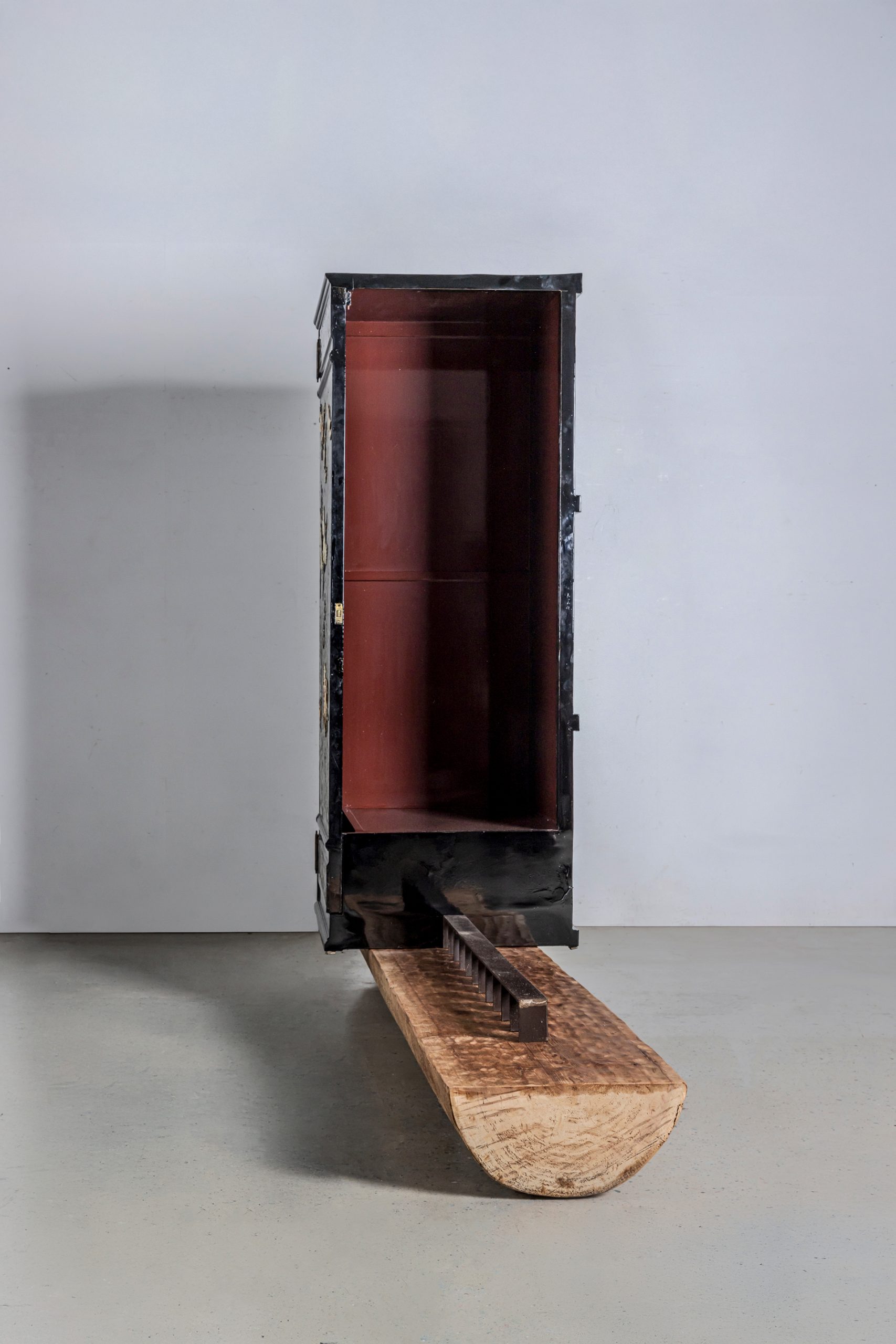
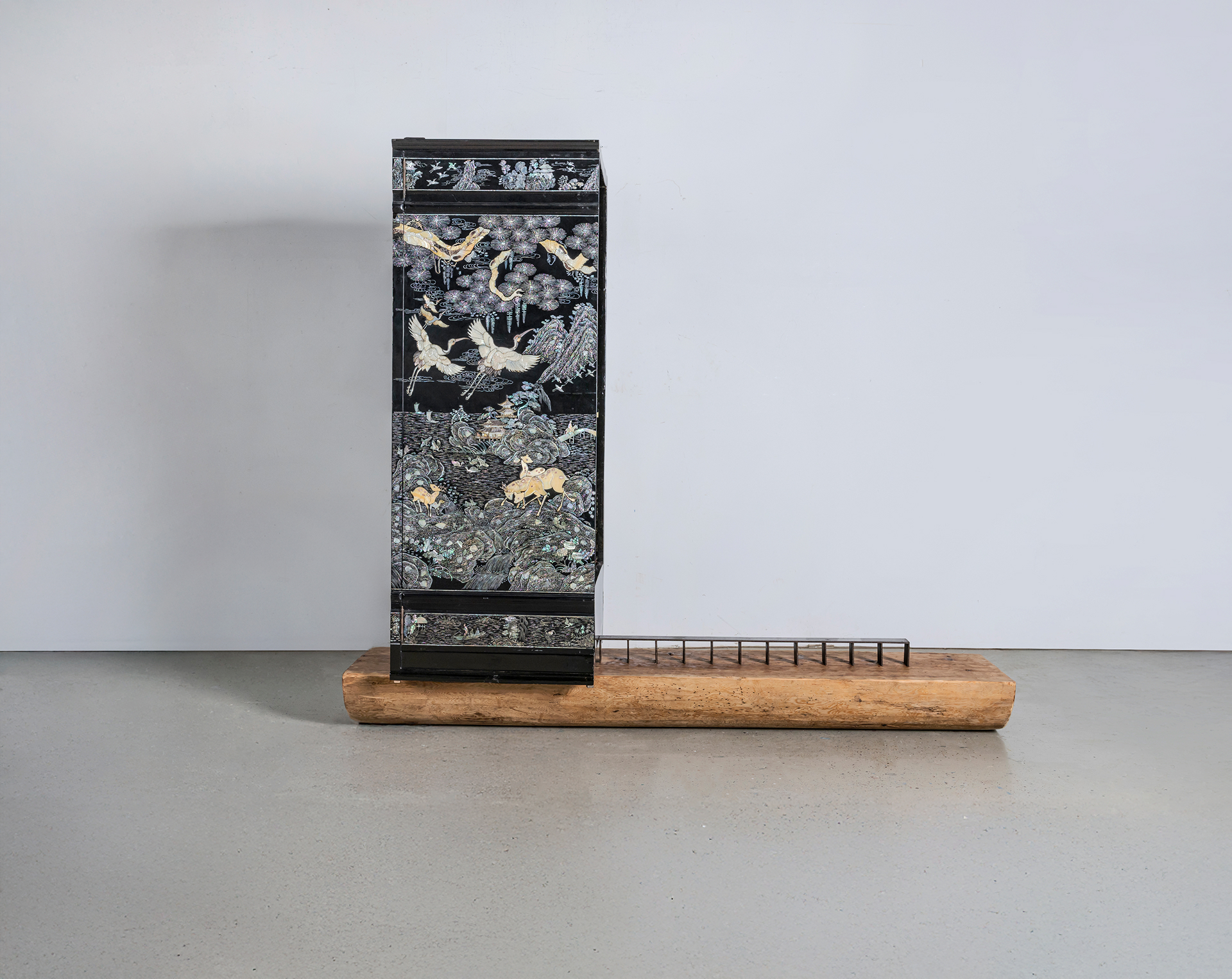
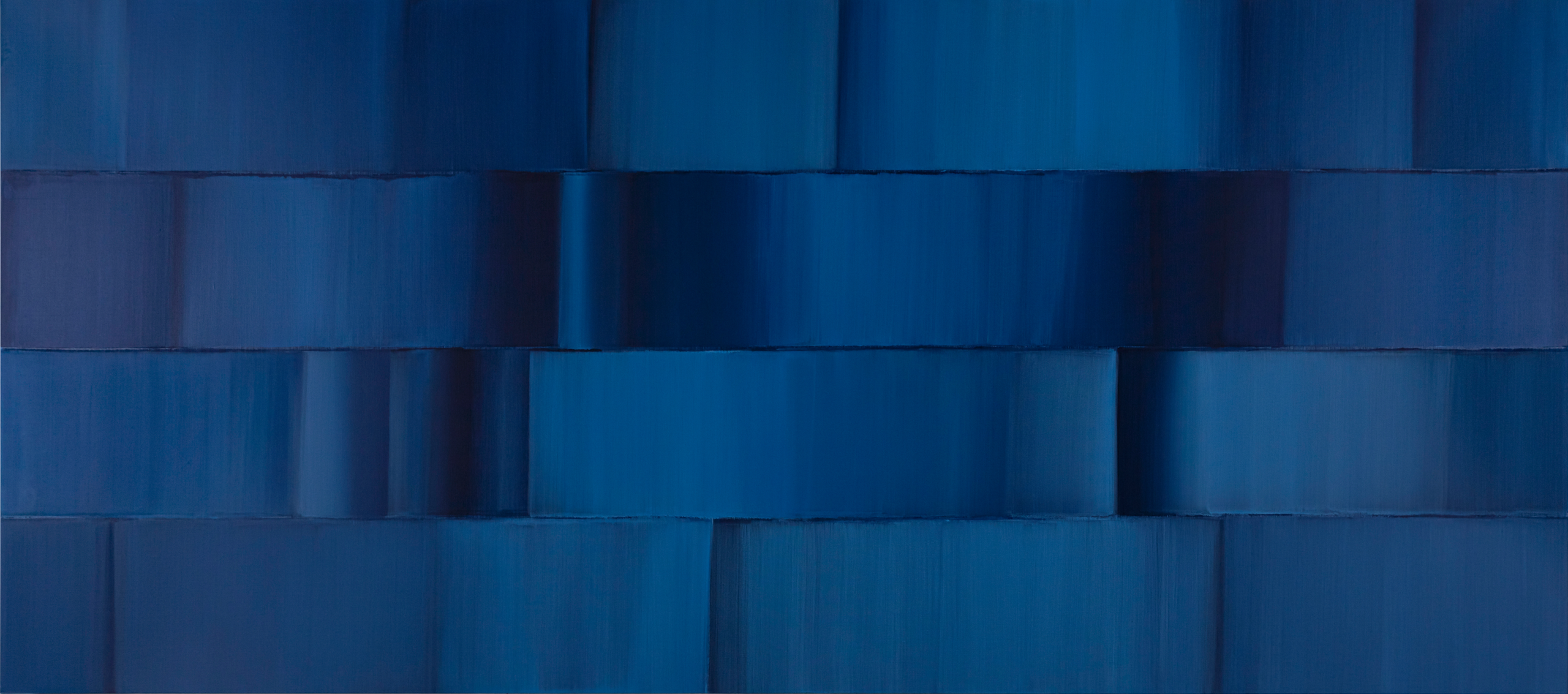
The exhibition traces the artist’s sculptural continuum through twenty eight works—painting, sculpture, and installation—drawn from his major series. Each piece marks a decisive moment within more than five decades of practice, from his debut at the 1973 Paris Biennale to new works completed in 2025.
Nature, a self-generating presence
In dialogue with the 61st Venice Biennale, Shim Moonseup: Nature Sculpts unfolds at Ca’Faccanon (calle delle Acque, 30124 Venezia VE), the historic former post-office building near the Rialto Bridge, from 6 May to 30 September 2026. The exhibition traces the artist’s sculptural continuum through twenty eight works—painting, sculpture, and installation—drawn from his major series. Each piece marks a decisive moment within more than five decades of practice, from his debut at the 1973 Paris Biennale to new works completed in 2025.
Shim Moonseup has achieved international recognition through over thirty solo exhibitions in leading cities worldwide. Emerging from the late-1960s Korean Avant-Garde (AG) movement, he advanced the radical notion of “anti-sculpture,” a concept that resonated with contemporaneous currents such as Mono-ha, Arte Povera, and Land Art. As the first Korean artist invited to exhibit in Paris’s Jardin du Palais-Royal, Shim presented his works alongside Daniel Buren and Niki de Saint Phalle, imprinting Korean contemporary sculpture upon the global consciousness.
Throughout the 1970s he participated in the Paris Biennale three times in succession, later extending his presence to the São Paulo Biennale (1975), Sydney Biennale (1976), and Venice Biennale (1995, 2001). His artistic stature was further affirmed by the Excellence Prize at the 2nd Henry Moore Grand Prize Exhibition (Japan, 1981). In 2007, the French Republic recognized his lifelong contribution with the Chevalier of the Ordre des Arts et des Lettres.
Shim’s trajectory demonstrates how an artistic language grounded in Eastern philosophical contemplation can expand into a universal aesthetic discourse. Over time, his creative axis has shifted from the anthropocentric to the eco-centric, relocating the source of art from human agency to nature itself. The artist perceives within the prima materia—earth, stone, wood, light, and water—a latent current of prima energeia, the formative energy that animates all matter.
Prima Energeia and Reincarnation
In Korea, Shim Moonseup is primarily known as a sculptor; yet in recent years abroad, he has become more widely regarded as a painter.
However, from a young age he worked not only in three-dimensional forms, but across painting, photo-drawing, photography, sculpture, and installation—experiencing and employing an expansive range of material vocabularies and expressive methodologies.
His works may now be provisionally grouped into eight broad thematic fields, which will be introduced briefly in the sections that follow.
Generative · Ecological Space
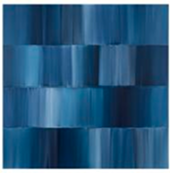
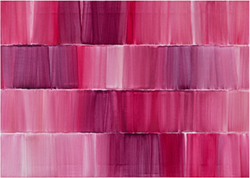
The exhibition title Nature Sculpts is not a rhetorical device but a sculptural declaration—an artistic response to the dual crisis of our time: the ascent of artificial intelligence and the planetary emergency of accelerating climate breakdown. We stand at a moment in which human authorship itself is challenged by machine cognition, while the Earth’s ecological system approaches cascading tipping points. Shim Moonseup confronts this threshold by posing a fundamental question: is the human the sole subject of art? Through this inquiry, he has overturned the dominant paradigms of sculpture.
His artistic philosophy resonates deeply with the thematic orientation of the 2026 Venice Biennale, In Minor Keys . Shim re-situates form not from the vantage of “center” but from the “periphery,” not from “progress” but from “slowness,” not from “will” but from “resonance.” His work recalibrates the relations between technology and nature, the human and the nonhuman, the subject and its environment—opening an ethical horizon for forms that emerge within marginal senses and lesser-visible orders.
Shim’s aesthetic shift actively embraces the temporalities of becoming and flow, repetition and reincarnation, slowness and immersion. In this view, art is not a completed object but an event of resonance—occurring and dissolving within space-time. This sculptural sensibility aligns with East Asian philosophical thought—wu wei (無爲), emptiness (空), and responsive attunement (感應)—while offering a profound alternative to Western sculptural epistemologies.
In this exhibition, such philosophy expands into the entirety of the spatial field. The exhibition space is no longer a display container; it becomes a Generative Space, an Ecological Structure, and a Sensory Field in which nature itself operates as sculptural agent. The viewer is no longer a spectator evaluating form, but a participant within its resonance—co-creating the sculptural flow alongside nature.
The Exhibition Project Harnessed From Nature
Harnessed From Nature is Shim Moonseup’s solo exhibition presented at the historic Ca’ Faccanon near the Rialto area of Venice during the 61st International Art Exhibition – La Biennale di Venezia. The exhibition rereads, within an international contemporary context, the fundamental conditions of sculpture that the artist has continuously explored since the 1960s—material, time, energy, and relation—while investigating the ontological and ethical questions that sculpture as a medium can raise today.
The exhibition title Harnessed From Nature deliberately rejects the notion of controlling or exploiting nature. Here, “harnessed” does not refer to a state domesticated for human purposes, but rather to a condition in which forces and orders already inherent in nature are allowed to operate autonomously once appropriate conditions are set. This implies a conceptual shift of sculptural agency from the human to nature itself, succinctly revealing Shim Moonseup’s long-established notion of the artist as a “condition setter.”
The Significance of the Exhibition
Harnessed From Nature is not a retrospective that summarizes Shim Moonseup’s individual artistic career. Instead, it repositions more than half a century of sculptural practice in the present tense, asking how plastic art today can be rethought under conditions beyond anthropocentric paradigms. As a proposal not for how to treat nature, but for how to coexist with it, the exhibition poses a quiet yet persistent question within the international discursive time of the 61st Venice Biennale.
Material, Time, and the Sculpture of Generation
In Shim Moonseup’s sculptural practice, primordial materials such as earth, stone, wood, water, and light (prima materia) are not objects onto which human will is projected. Positioned in space with differing temporalities and densities, these materials give rise to sculpture through the relations, tensions, and flows of energy (prima energeia) that emerge between them. Form is never fixed; the work does not exist as a completed result, but as a state of generation still in progress, in which nature continues to act.
This approach shifts sculpture away from modes of possession and interpretation centered on the object, transforming it instead into an experience of dwelling and resonance. The viewer is no longer a subject who reads meaning from the work, but a presence exposed to the operations of material and time. Sculpture ceases to be something merely “to be seen” and becomes an event of co-presence.
Reconfiguring Space and Experience
The space of Ca’ Faccanon functions not as a mere exhibition container, but as a generative space and a sensory field in which nature operates as the subject of form. The works do not simply occupy the space; they act together with it, producing different experiences depending on the viewer’s movement and duration of stay. Rather than demanding interpretation, the exhibition asks the viewer to pause, to sense, and to listen.
Contemporary Conditions and an Ethical Turn
Harnessed From Nature acquires heightened significance within today’s conditions, in which the rapid expansion of artificial intelligence technologies and the global ecological crisis unfold simultaneously. In an era where human creative subjectivity is being reconfigured by technology and nature can no longer be regarded as an infinite resource, Shim Moonseup’s work sidesteps the logics of production, control, efficiency, and speed. His sculpture proposes another temporality—one of slowness, resonance, circulation, and responsiveness—inviting reflection on sculptural possibilities beyond anthropocentric thinking.
This exhibition is not a moral declaration advocating the protection or celebration of nature. Rather, it is an aesthetic experiment aimed at reconfiguring the relationship between nature and the human, and a site for questioning how sculpture as a medium can contribute to such a relational transformation.
Visit
May 6 – September 30, 2026 Ca’ Faccanon, Venice