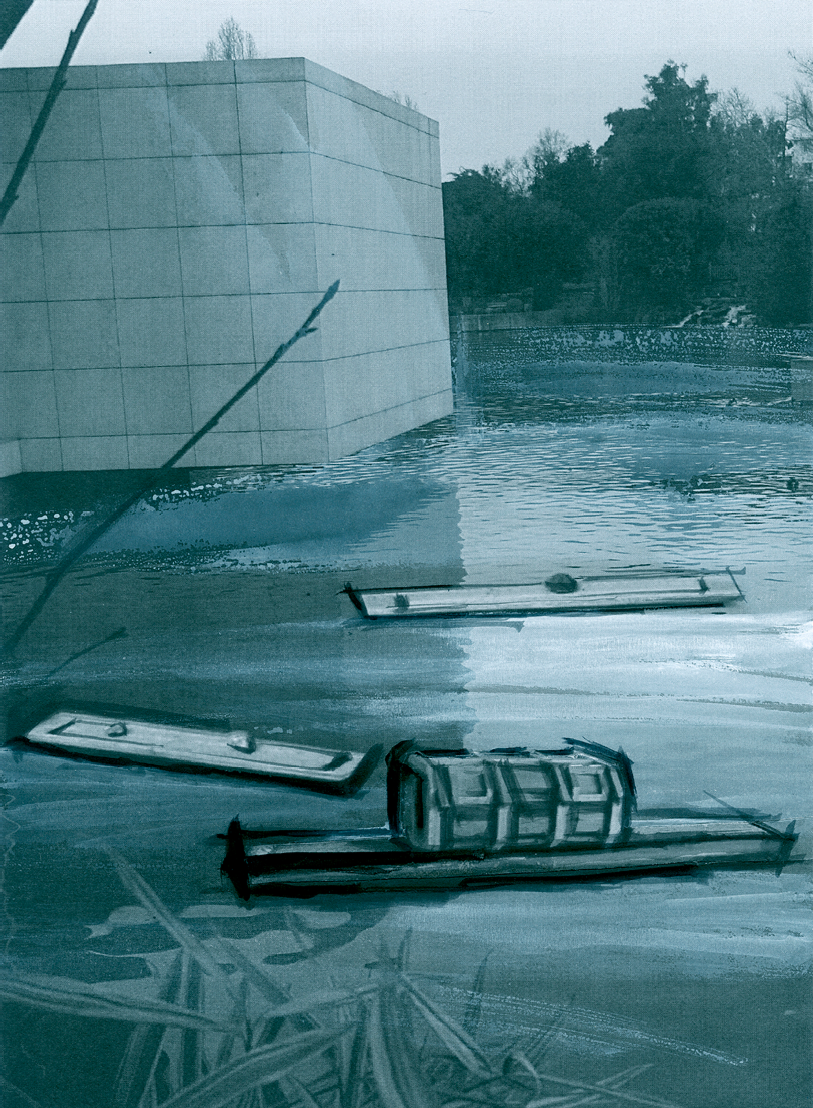
A space of thinking
Olivier Kaeppelin, Art Critic, France The former Director of the Maeght Foundation
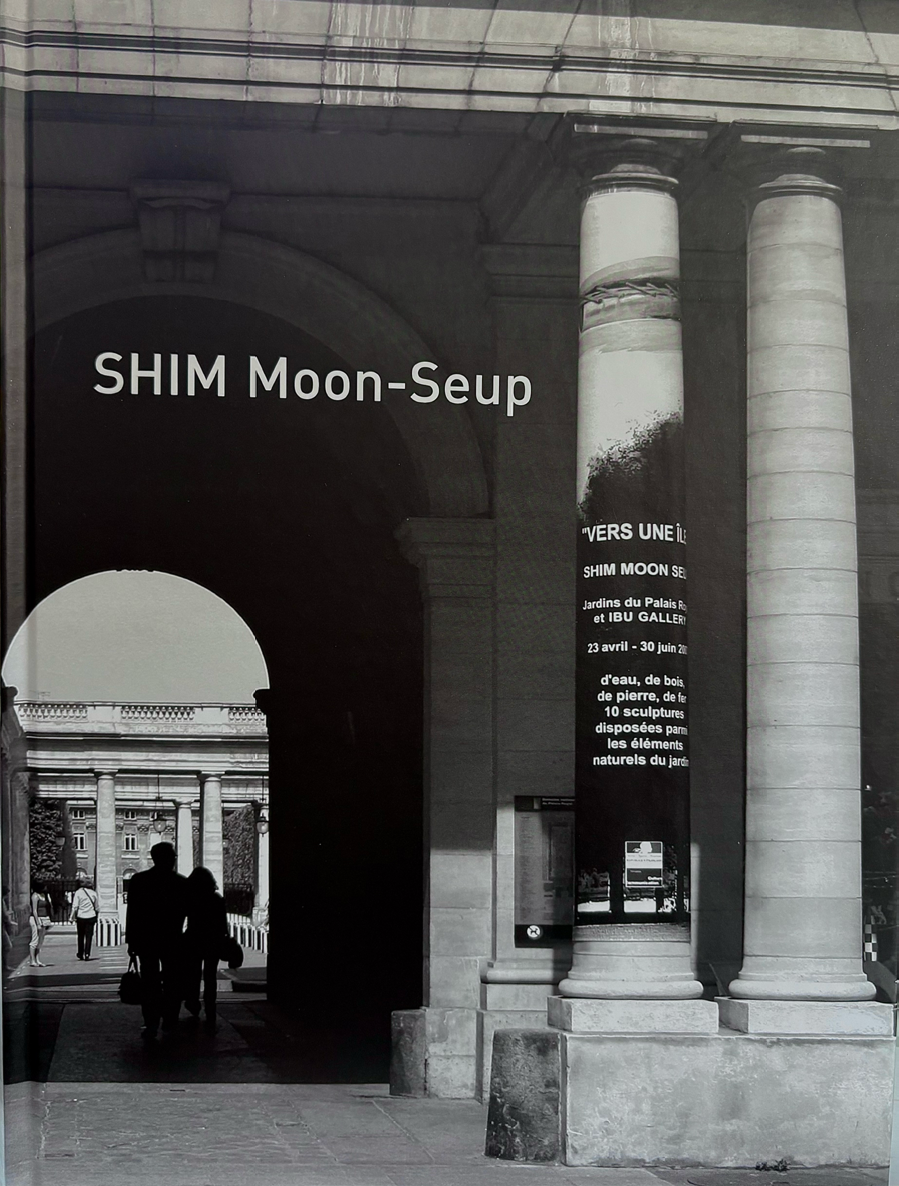
Jardins du Palais Royal Paris, France
While flying, the sea bird shouts,
“Who, who?”
And the wave, carefree marauder,
Breaks again!
Herman Melville
After I first met Shim Moon Seup’s work, I found more about the artist in 1975 at the Paris Biennale, among a large number of paintings and sculptures coming from all around the world. However, The real meeting happened long after that, around 1995. At that time, his Parisian gallerist Jacqueline Moussion wisely introduced his sculptures in relation to those of the great Czech artist Stanislav Kolibal who is older than he is.
While the two artists’ constructive drawing, their materials, and their precision of created spaces were similar, their difference was also clear.
Kolibal’s work developed from orthogonal rules and the playful use of Euclidean geometry, whereas that of Shim Moon Seup was designed through indifference to these rules, through swerves, and through empty spaces prepared inside such geometry.
Stanislav Kolibal was offering energy, a dynamism included in the beauty of an aesthetic space, which found its reason and its fullness in itself, whereas Shim was displaying the existing shapes, thanks to the spaces circulating around them. I felt that these shapes would never be closed in themselves. Rather, they would be ‘in life’ and maybe ‘in danger’ due to the incompleteness which was also their strength.
In 2013, it was one of Shim’s sculptures, which was led by this spirit, that I chose to exhibit as a ‘curator’ with my friend Christian K. Scheffel on the occasion of the large- scale Biennale of sculptors “Blickachsen 9” in Bad Homburg and Frankfurt. Before being exhibited in Germany, the sculpture was introduced in Paris, in the courtyard of a former hotel of the 18th century. Something amazing happened! Despite the imposing beauty of these classical buildings, it was the powerfulness of this sculpture on the ground that caught my attention. The sculpture was captivating the whole space. The venue was dominated by it and was alive thanks to it.
Made of dark-colored steel, the shape was flat. The first time I saw it, I thought that it was expressed under the influence of Carl Andre’s poetic declaration, “I knocked down Priapus.” I then came to believe that on the contrary, it was ‘turning Priapus upside down.’ That is, Shim was making use of this principle to undo it, to turn it over. He was breaking his sculpture which is only 25cm high and 2.7m long. He was then raising it by making a gently sloped diagonal, tilting a cast steel plate. The plate was keeping the memory of the state of the sculpture’s material thanks to the expression of length, softness, and folds. Shim turned over the concept of a ‘thin and flat’ sculptural surface in order to suggest a vision that is shifted, mixed in motion, and crossed by air. As the title of his work Opening Up suggests he made an incision in it, jostled it, knocked it over, and connected it to the energy of the surroundings. He ‘reopened’ it, thus expressing the wave physics of the material and the plurality of the dimensions he was expressing: those of ‘here and beyond’ joined together. From that point, this position involved letting go of any formalism. It leads to a close relationship to nature, with ‘the spirit of nature.’ Shim makes it clear through the use of his materials: wood, earth, mineral, water, and metal conserving its initial quality through its treatment.
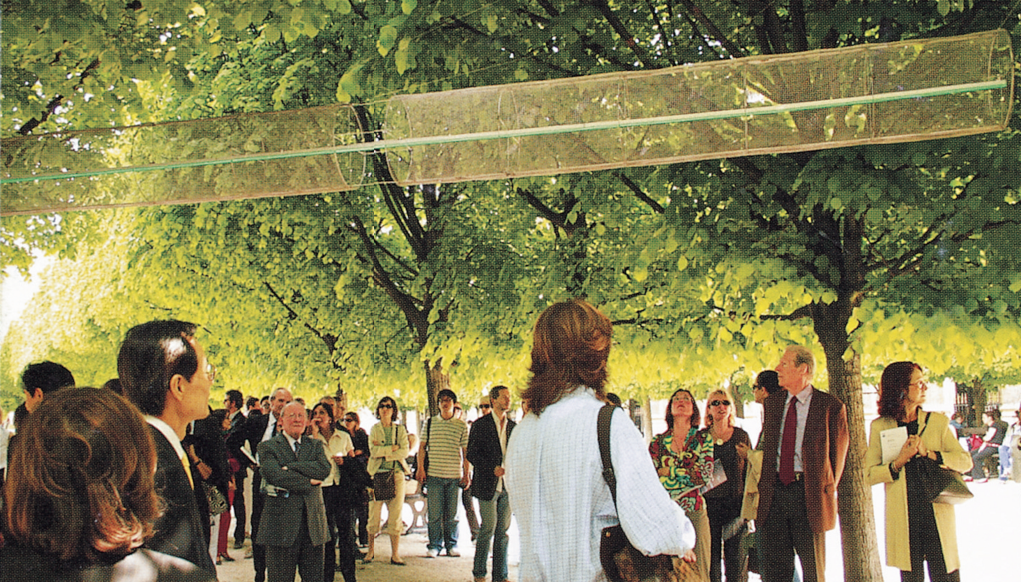
Jardins du Palais Royal Paris, France
Later on, water was an amazing surprise at the exhibition I organized with the gallery IBU at the Palais Royal in Paris. There again, even more than the Le Marais district, the site receiving his sculptures insisted on that surprise because it constituted a crown jewel of French architecture. As I walked beside works by Buren and Buri, such a walk in the architecture, which was full of history, literature, and classical and constructive principles, was turning into a walk that was accommodating water while not forgetting about other elements such as animals and the wind, thanks to Shim’s installations. By that time, water hadn’t ‘retained’ my attention and reverie, almost never, even though I had been acquainted with this place and loved it passionately.
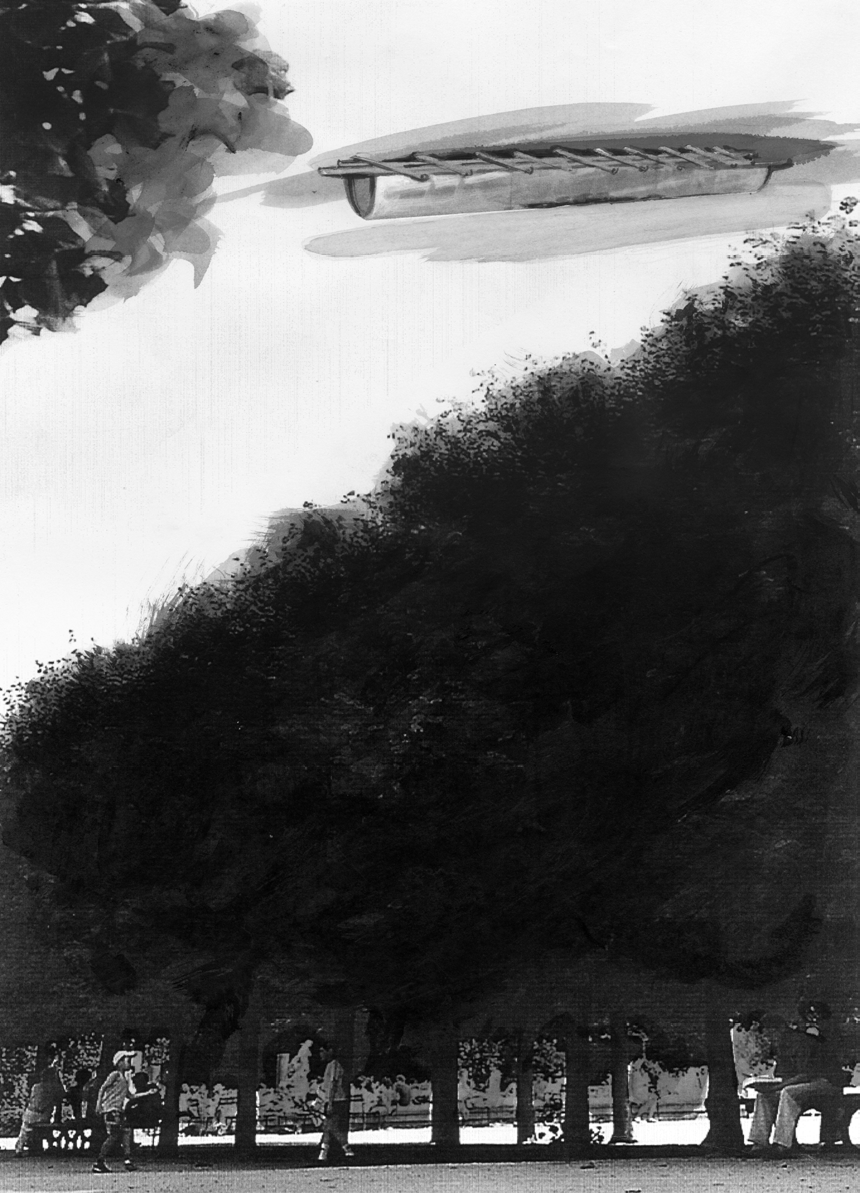
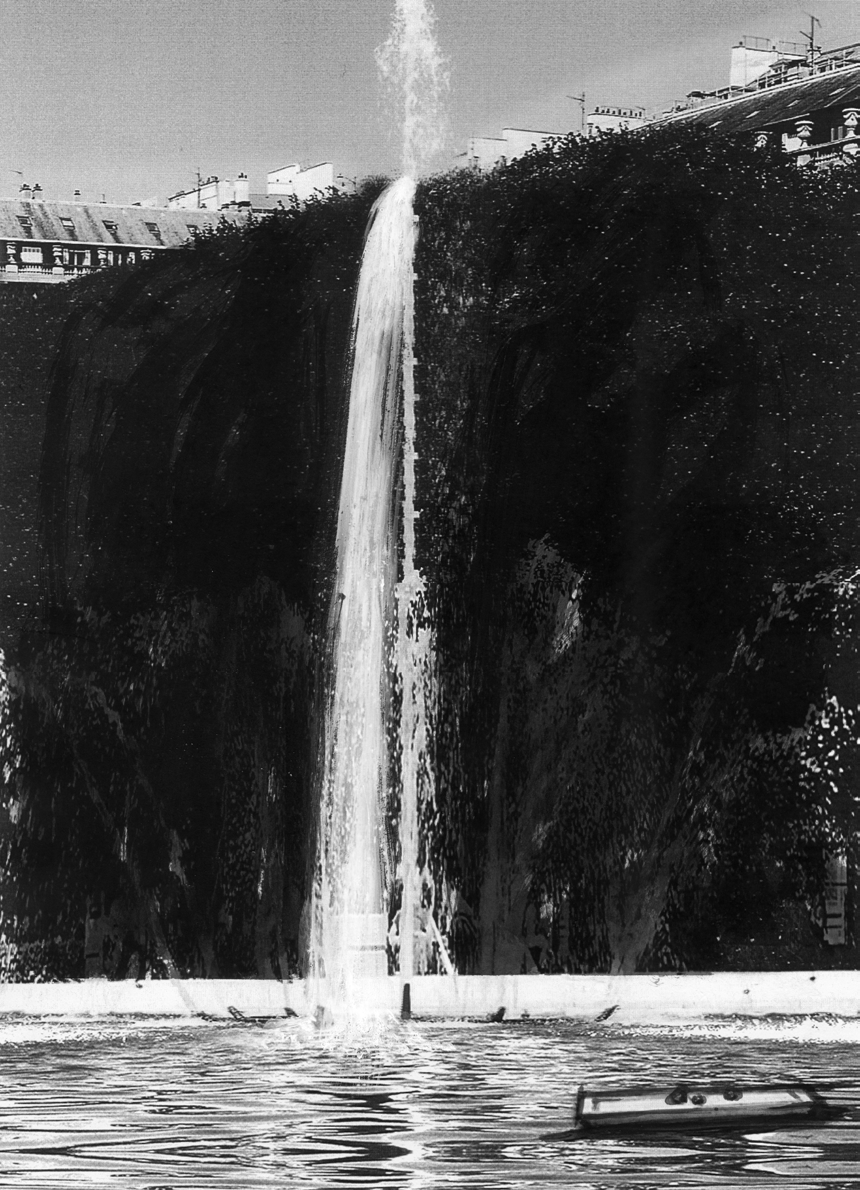
It was fascinating to have this first-hand, visual experience of this process of metamorphosis. In that space, water was becoming a range of nature: lake, pond, sea… The sculptor was having the wooden shapes float around. These shapes reminded us of his vertical work while they were horizontal. They were staying in the movements caused by the spurt of water from the pond. Losing all its phases, this pond was turning into an ocean, swallowed by the entire installation. On one of his wooden sculptures, which was displayed diagonally, water was flowing softly. How happy I was to see birds quench their thirst and stay there, with animals’ world integrated into Shim’s creation. Up there, pulled between trees, cylinders made of a metal net were facing the fluctuating wind and the sound of its vibration, thus welcoming the presence of the birds just like that of insects and leaves. The impressive immobility of the buildings in the Palais Royal was crossed, thanks to these devices, by multiple directions, routes, and movements. In this way, we were able to see how liveness was coming and going and how it was rich.
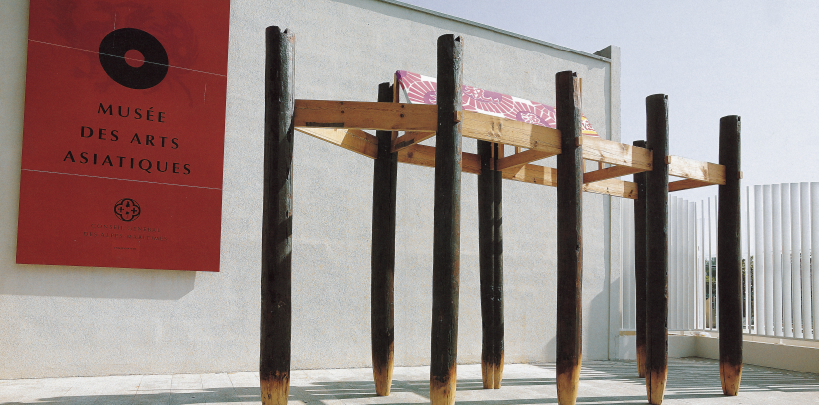
The Presentation to an Island, Musee Des Arts Asiatiques, Nice, France, 2008
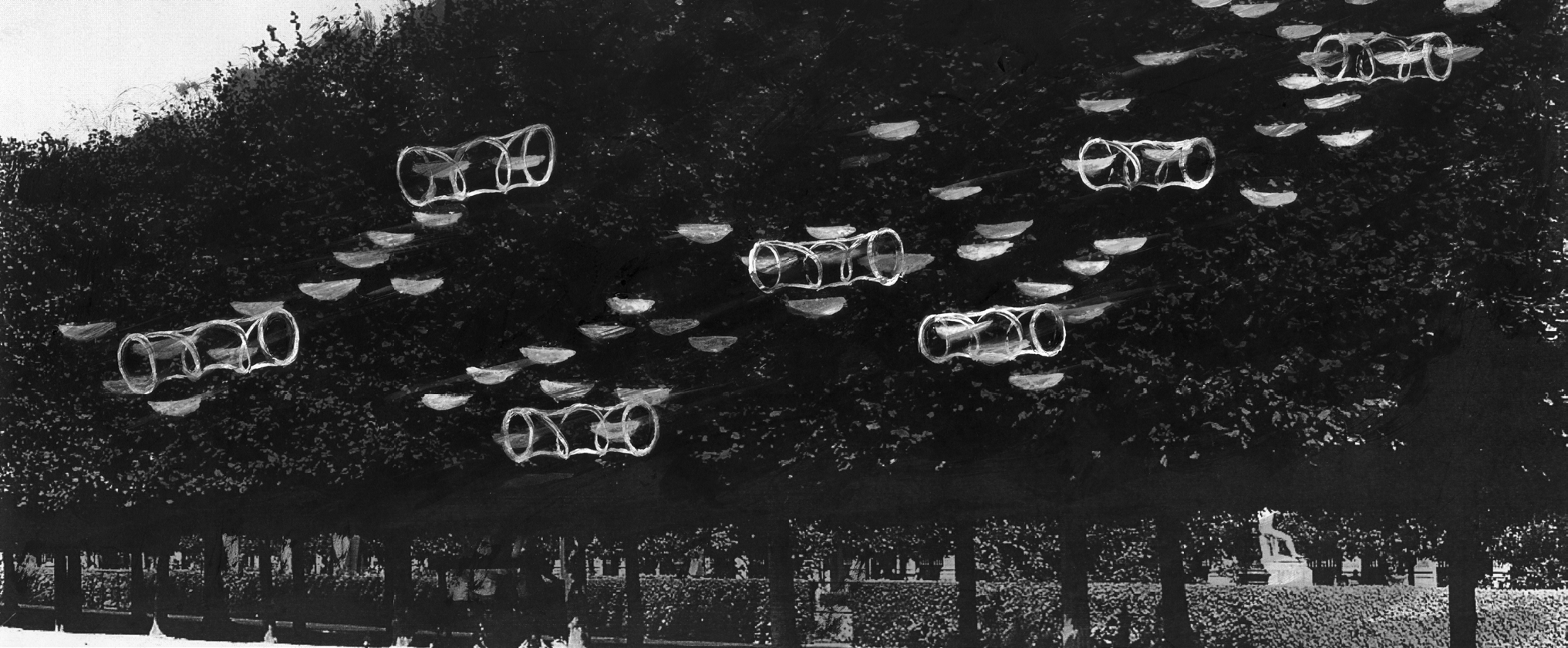
To express such richness in an even clearer way, on one of the lawns, through a blower system, the oblong balloons were inflated and deflated, following the blast of air generating the rhythm of breath staying in the rock and the garden. The theme of this installation was thus thwarting the monumental aspect of the place, heading to dimensions that are not only even wider but also intangible and elusive: the dimension of a breath that was taking hold of the spaces and bodies.
That was the essence of Shim’s art, as it was confirmed later, on the occasion of his surprising retrospective at the National Museum of Modern and Contemporary Art in Gwacheon or the recent, touching exhibition The Voyage of Time at Gyeongnam Art Museum.
Shim’s art makes itself visible with its richness: sculptures, paintings, drawings, installations, designs… But what is important isn’t there. What is essential is the clarity of his ‘vision’ that is present in all his practices and all the genres he uses. This vision originates from nature, a nature he interprets and reconstructs, just as the artists of Arte Povera [i.e. Luciano Fabro or Anselmo] were able to do so. Shim communicates with nature just like making discoveries of quantum physics. In Shim’s work, just like in these physical theories, particles and waves aren’t separate. Here, they are of the same nature. The opposition between suspended immobility and dynamics in movement doesn’t exist anymore because what is mobile and what is static are understood as one concept of the material.
Everything here is passing through a certain trajectory and above all, aren’t we constituting this energy that gathers all this together in ceaseless coming, going, and crossing? We are revisiting these coming and going today, in Shim’s painting and the ‘ceaseless’ rhythms of his brush strokes on the surface. Within the same period and within transparency, such brush strokes give life to the material and light that lead us to believe that they are the same substance.
Shim’s work reminds us of the fact that he was born in the heart of the archipelagos in the south of Korea, cradled by the coming and going of the sea. It also tells us that there is no definitive island with its eternity guaranteed. The only eternity, the only experienced entirety, is this intense, rare, and precise moment of the ‘fullness’ of the movement that leads us by going from one point to another
In Shim’s work, there is a ‘sway’ that ignores the principle of balance and comprehension in order to choose a principle of uncertainty, which allows us to ceaselessly question the universe, moving from wonder to wonder. It is this path that, thanks to Shim’s sculptures and paintings, offers us this joy of the ‘open’ just as German poet Holderlin thought so, the joy of ‘Opening Up’ just like the title of Shim’s emblematic sculpture, or finally, the joy of these verses in one of his poems where he tells us:
“ (…) The rising waves Make a certain decisive moment and disappear Make us stay in a temporary and hypothetical Space of thinking (…) ”