It is a Saturday afternoon in March in Seoul. The air is bright and clear The first sun of spring is shining on the campus of Chung-Ang University, but the golden light outside does not filter through to the row of small rooms of the Department of Fine Art where Shim Moon-seup teaches and where he has decided to show me his most recent sculptures, his Wood Deities as he calls them, or Moksin.
In the unreal atmosphere created by the electric lighting, these pieces of wood cut into the shape of a thick board usually mostly lying flat on the floor or sometimes standing upright, take on a magical quality. Each of these flat oblong objects seems to be living in its own way the destiny created by its own immanence.
This is why these Moksin transmit specific messages to us which reflect their mythical history. Through their rustic appearance, the force and precision with which they have been put together their comers of forged steel hammered into shape, they remind us of their origins as crafts, in other words they have kept their functional appearance as if in memory of this. This is the first thing that catches your eye. This one could be a flat box, a bucket, a kitchen tray, an agricultural implement, the shaft of a yoke or plough. But a second glance very quickly dismisses this frame of reference to domestic and rural reality. These fragments of beams probably come from a stable or a barn, but this link with the original timberwork gradually gives way to more spiritual connotations. This is what these phallic or votive stelae look like, these symbolic magical anthropomorphs, the image of a newborn baby in its cradle, miniature mummies a metre long, the wrinkles of a sexual organ and the furrow of a vaginal cleft.
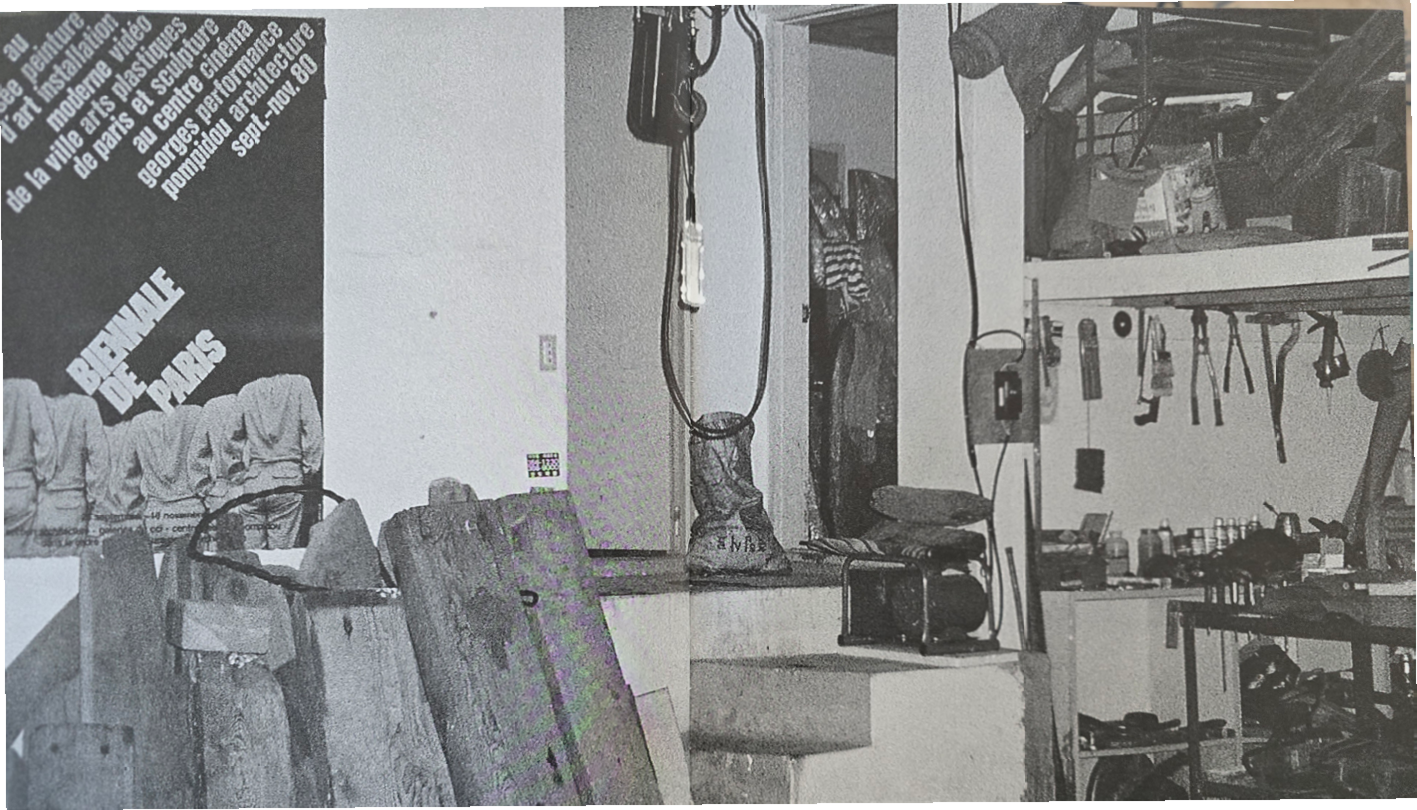
Opening Up, 60x50cm(4 pcs), 1975, Cloth, Sandpaper
It is a question of a second degree form of naturalism, or to put it a better way of a kind of conceptualized realism. The sexual imagery illustrates the true harmony between the artist and the natural world. Shim’s intuitive and spontaneous way of life is a return to the origins of mankind and the world as it first was. And if it is appropriate to refer to Shamanism when talking about the Moksin, then we should refer to the globality of the concept, in other words, not to wood spirits but to the Spirit of wood.
The vivid tone of his work is the fruit of his direct affiliation with the nature of things. It may also be the distinctive mark as a Korean, but I will not risk going any deeper into this delicate question; Shim’s numerous Korean and Japanese critics have tried to place him in relationship to both Arte Povera and Mono-ha.
However, there is none of the miserable nostalgia so vital in Arte Povera in Shim’s work which is vigorous and reveals his deep love for the material. Neither does he share the desire of the Mono-ha to put minimal gesture and pattern into diagram form. He derives great pleasure from the cut, the shape and the patina of wood, also from the subtleties in the ways things are put together and from the great variety of kinds of wood, from playing around with metal incrustrations and inlays.
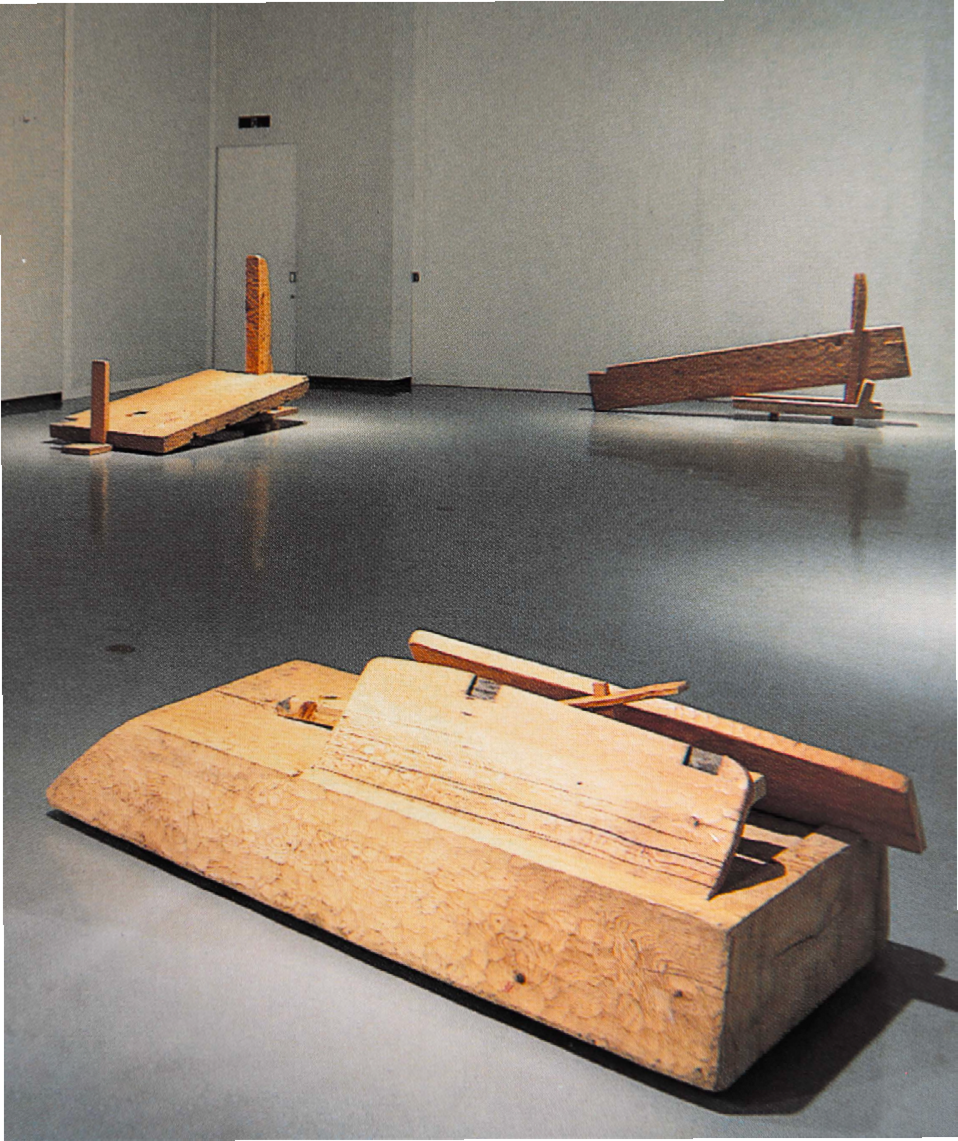
Circulating Currents Japanese and Korean Contemporary Art, Nagoya City Art Museum, 1995, Nagoya, Japan
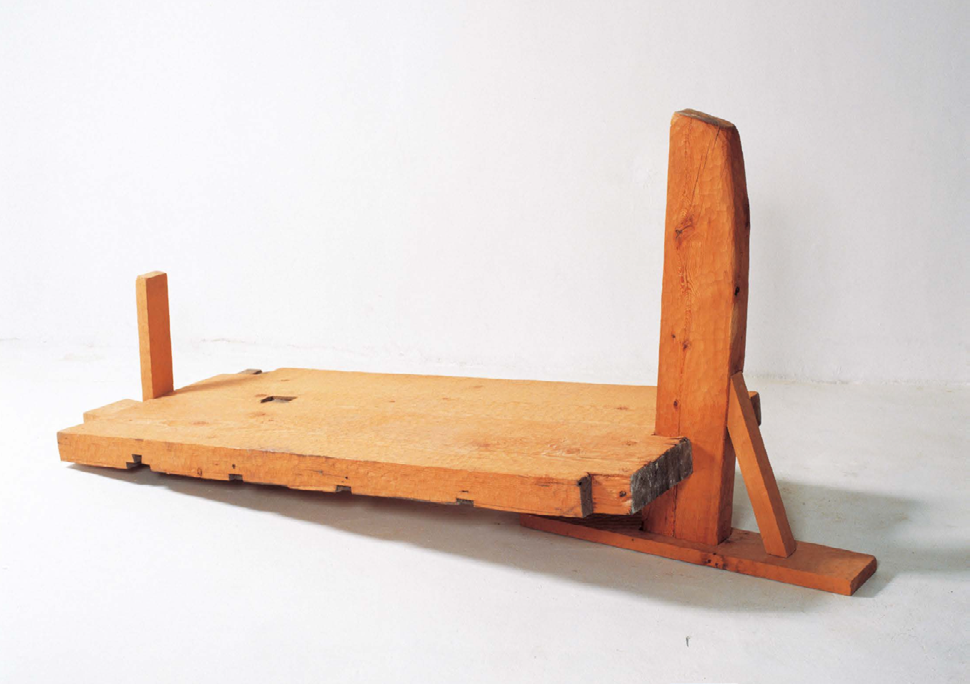
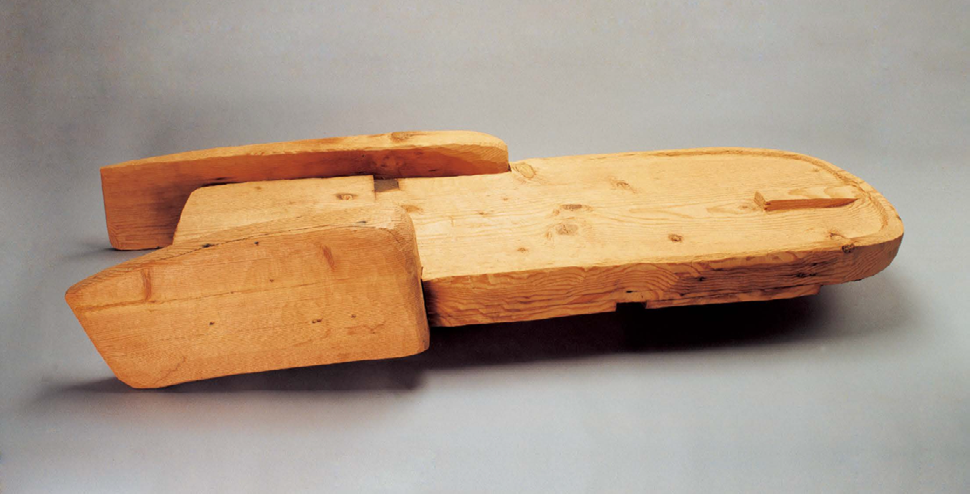
Opening Up, 60x50cm(4 pcs), 1975, Cloth, Sandpaper
For these reasons Shim Moon-seup has a unique place in the field of contemporary sculpture in general and all the more so in the world of Korean sculpture in particular, if one believes my colleague, Lee Il when he says “After his classical training, Shim abandoned traditional art forms and threw himself into a search for his deepest self through the free approach offered by the materials themselves; the cutting of the wood, the shaping of the clay the forging of the iron.”
To return to the Wood Deities, it should be pointed out that these objects which are both strange and familiar, common-place and symbolic, sacred and profane belong somewhere between sculpture and statue as they comprise aspects of both art forms. The power of their objective presence makes the Moksin sculptures, while their highly refined symbols make them a part of the order of statues.
My friend Lee U-Fan, a great master of Mono-ha and an admirer of Shim’s work, has very kindly given me a clue which explains the fundamental ambiguity of the Moksin. According to tradition in Korea, Lee U-Fan told me, raised stones are objects while stones lying down are images. On the one hand there is pure form, which is sculpture, while on the other hand there is the icon, the effigy which is the statue. Thank you Lee U-Fan. From now on, I shall try to study the manifestations of the ‘Spirit of Wood’ in the work of Shim Moon-seup with a more analytical eye _ for he is an artist unique in his genre; the most poetical of joiners and the most conceptual Shaman. And in doing to I may be successful in deciphering, from down here on the ground, a few modern fragments from the immemorial message of a culture thousands of years old.
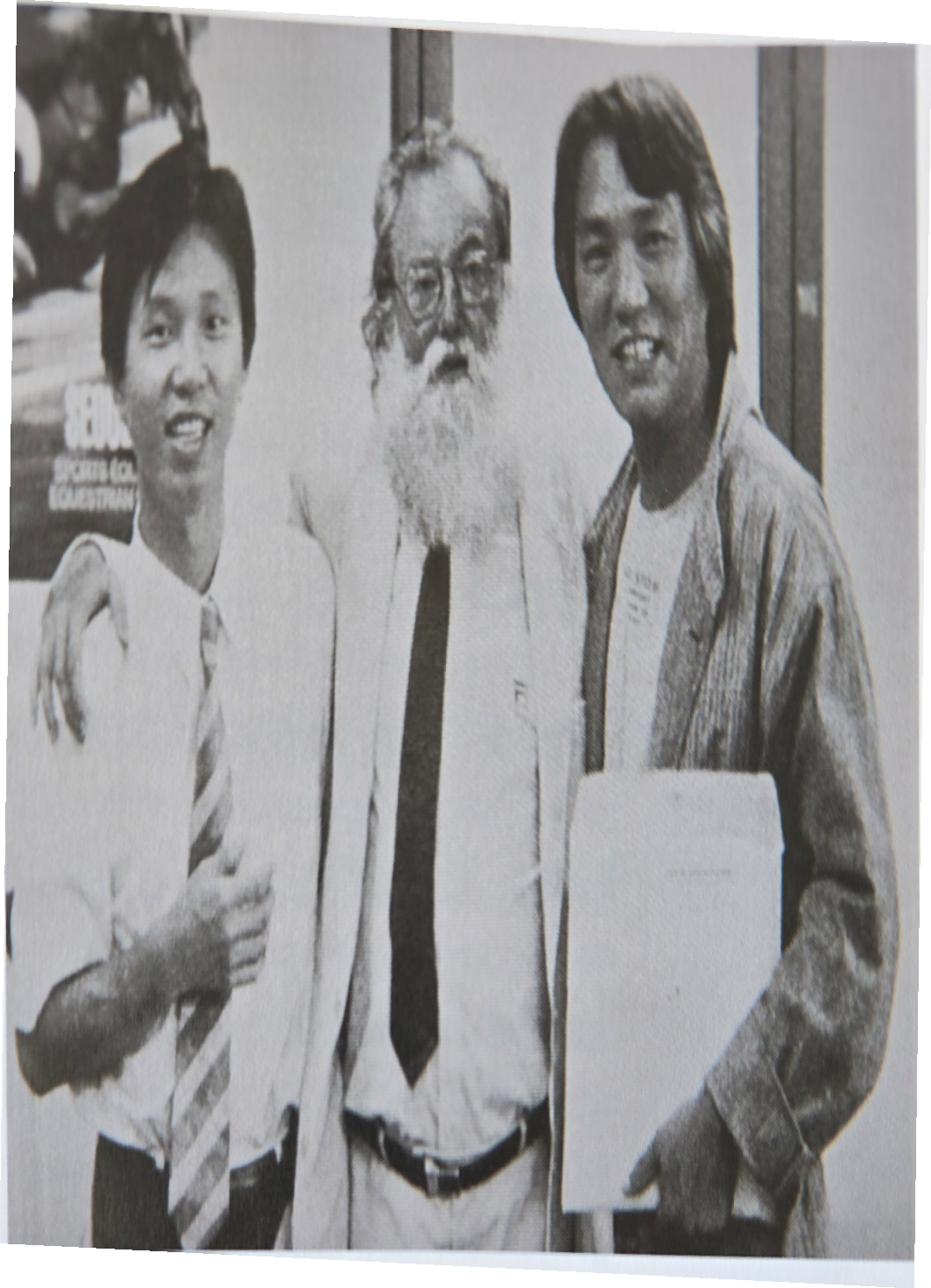
Katoh Yoshio, Pierre Restany, Shim Moon Seup